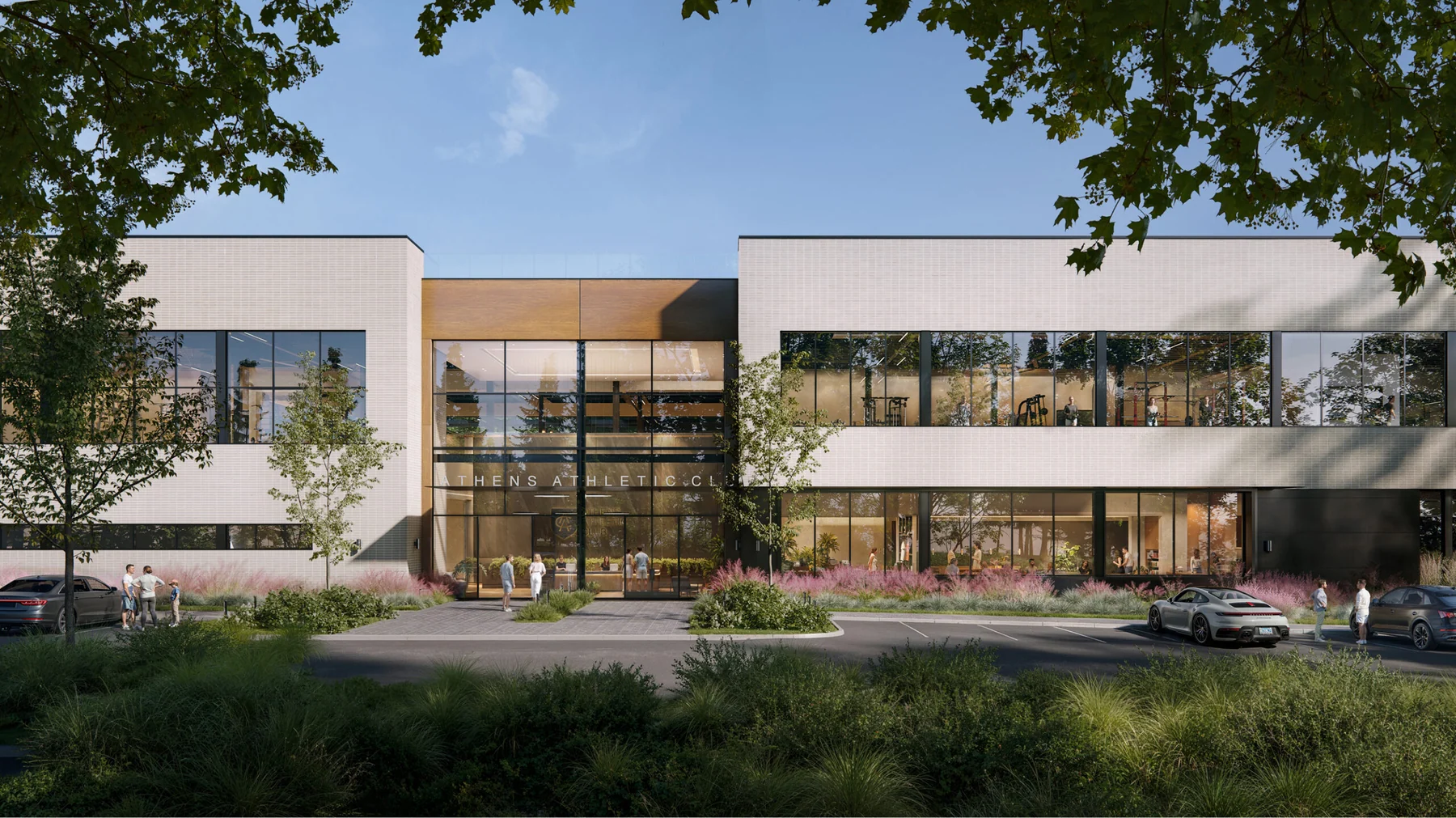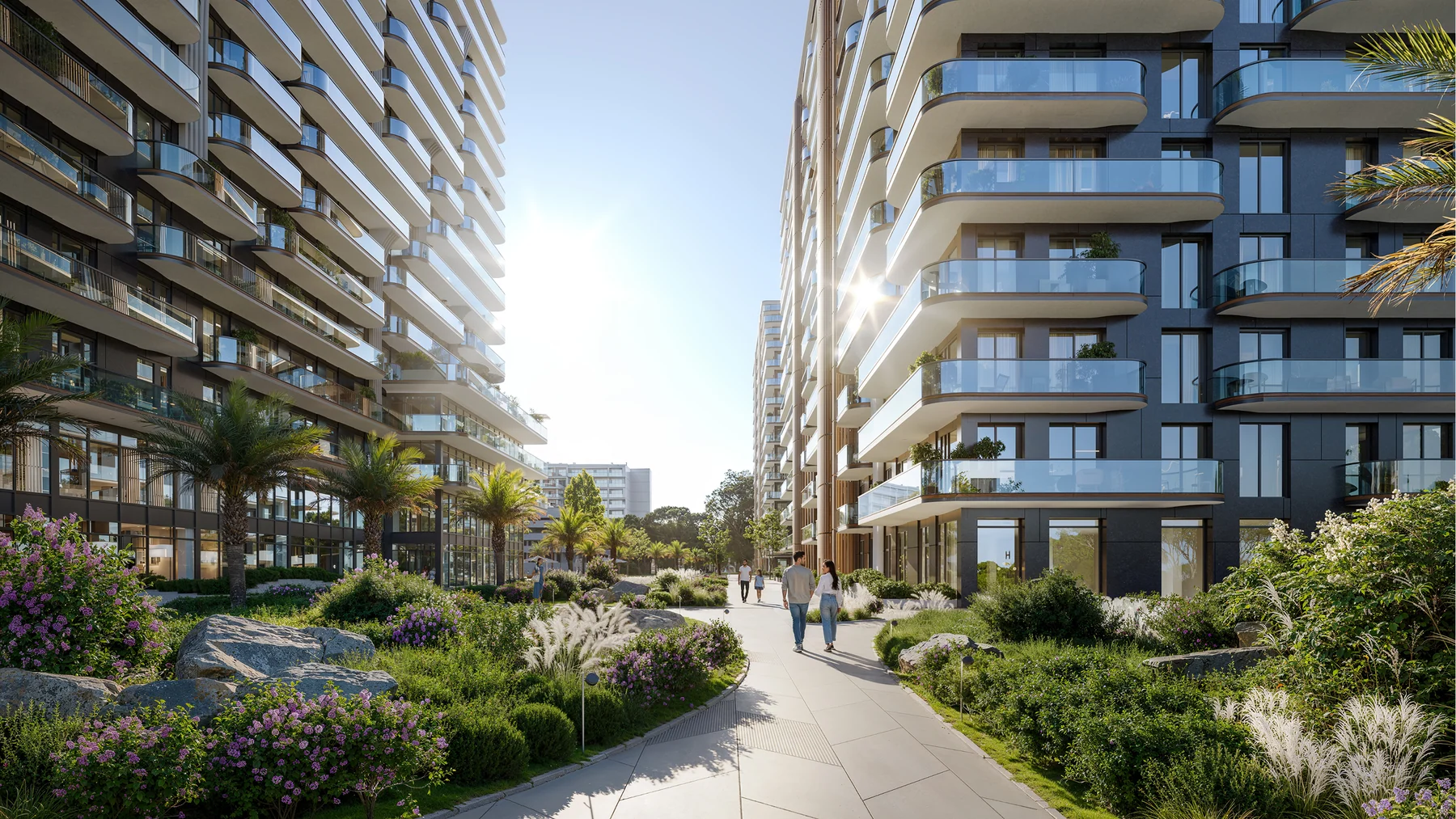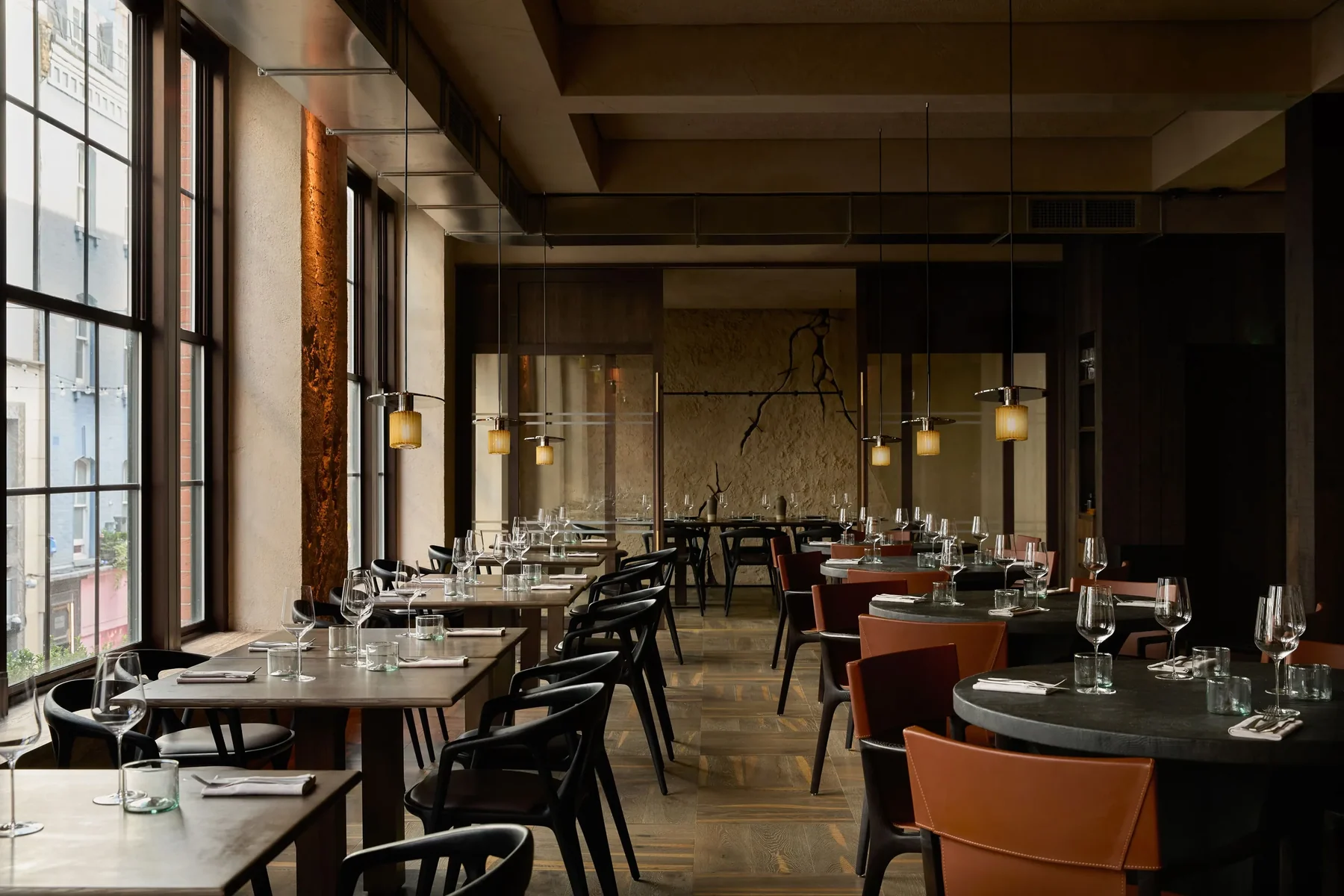
"Two rounds of revisions" is a line in almost every visualization quote, but it means very different things depending on the studio – and vague revision terms are where most project friction actually starts. Here's what a structured round looks like on our end, and why we moved from two rounds to three.
Round one: geometry and camera
Before any color or lighting work begins, we send a neutral, grey-material pass so the conversation stays focused on what actually matters at this stage – is the massing right, is the camera angle telling the right story, are the sightlines believable. Reviewing this in color is a distraction; grey keeps the eye on the shapes.
Round two: color, light and materials
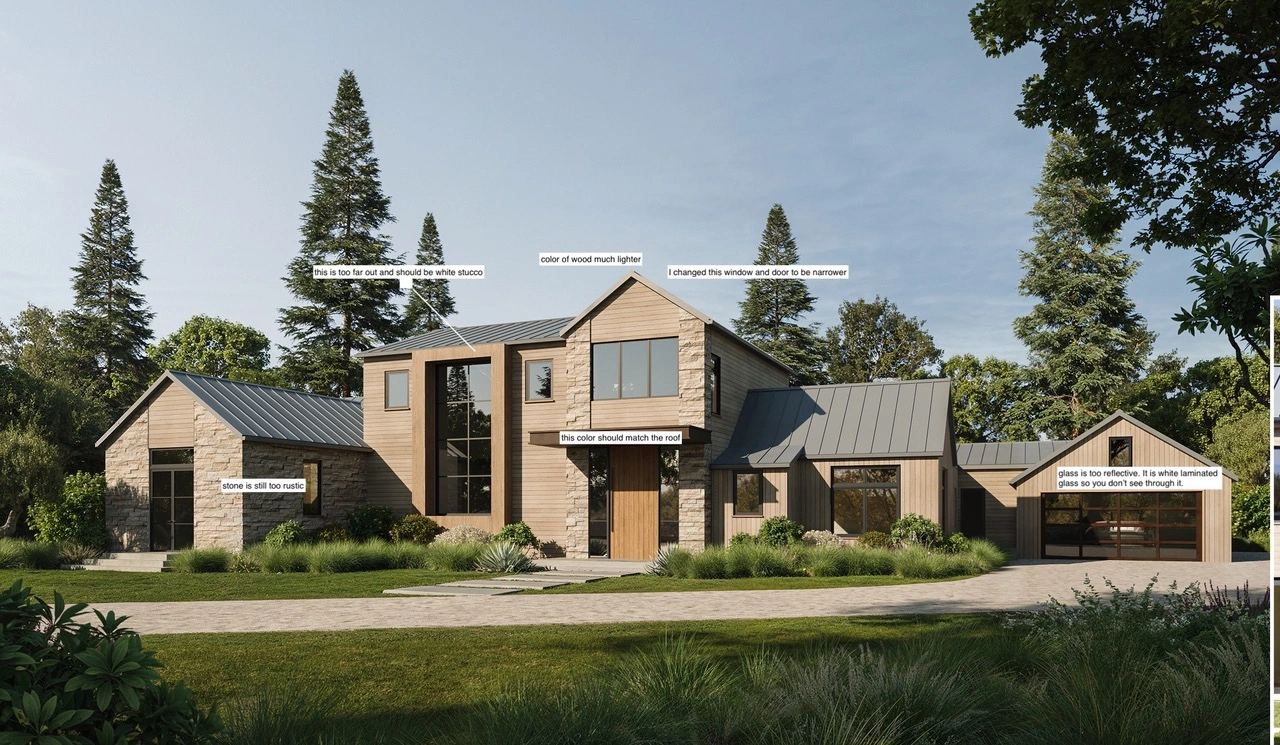
Once geometry is locked, the second round is where the client sees the building as it will actually look – real materials, real light, real context. This is usually where the most specific notes come in: "the stone reads too rustic," "that glass needs to be less reflective," "match this color to the roof." We annotate directly on the image so nothing gets lost in translation between a call and the next file.
Round three: the fine layer
We added a third structured round because the notes that show up after color and materials are settled are usually small and specific – a window proportion, a signage detail, a shadow that's slightly too hard – and trying to fold them into round two just meant either rushing them or delaying the whole image. A dedicated final pass means those last details get the same attention as the first ones, without reopening decisions that were already made.
What doesn't count as a revision
Changing the season, the camera angle, or the building design itself isn't a revision – it's a new brief, and it's worth knowing that distinction going in so nobody's surprised by a scope conversation midway through a project.