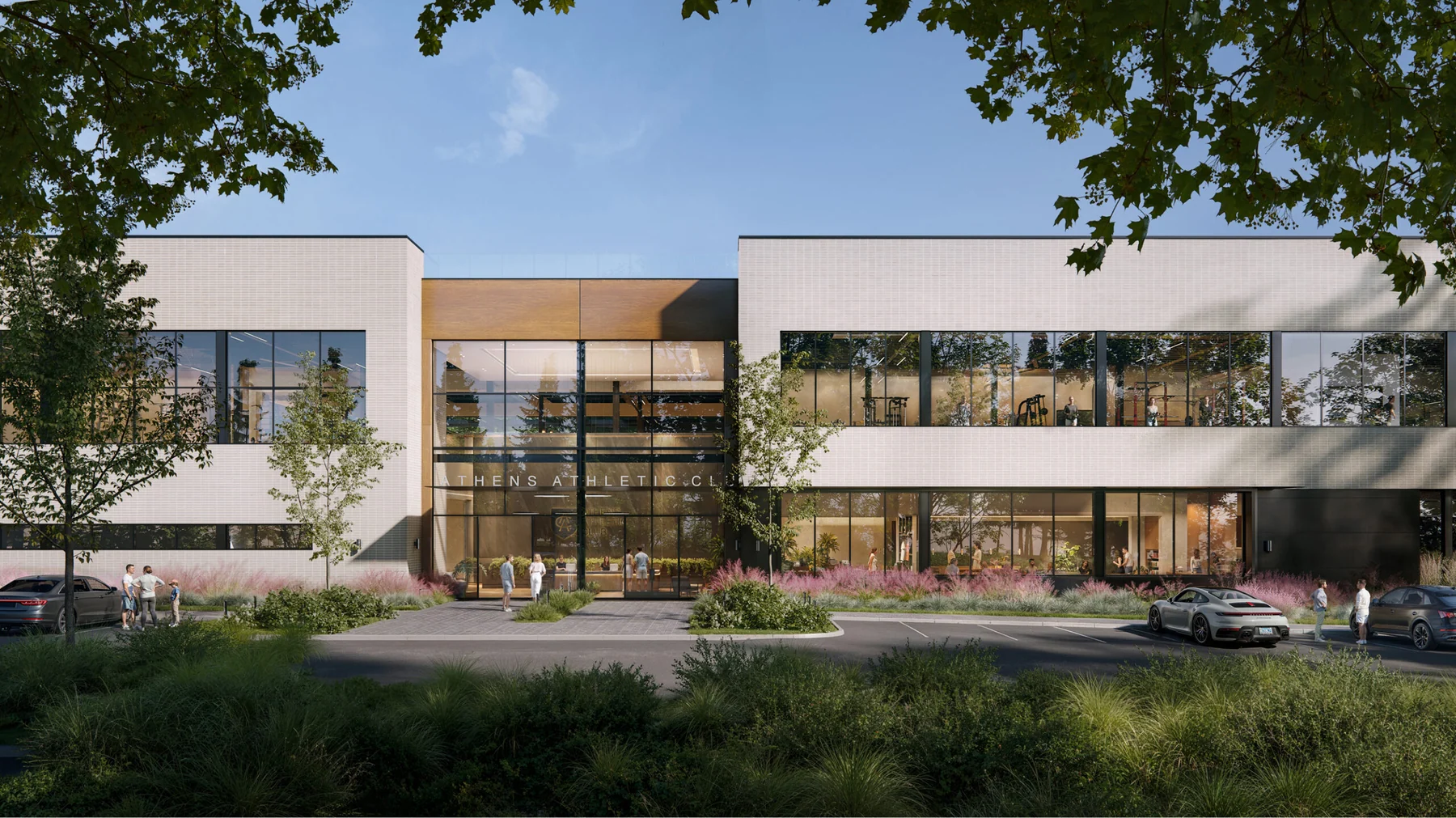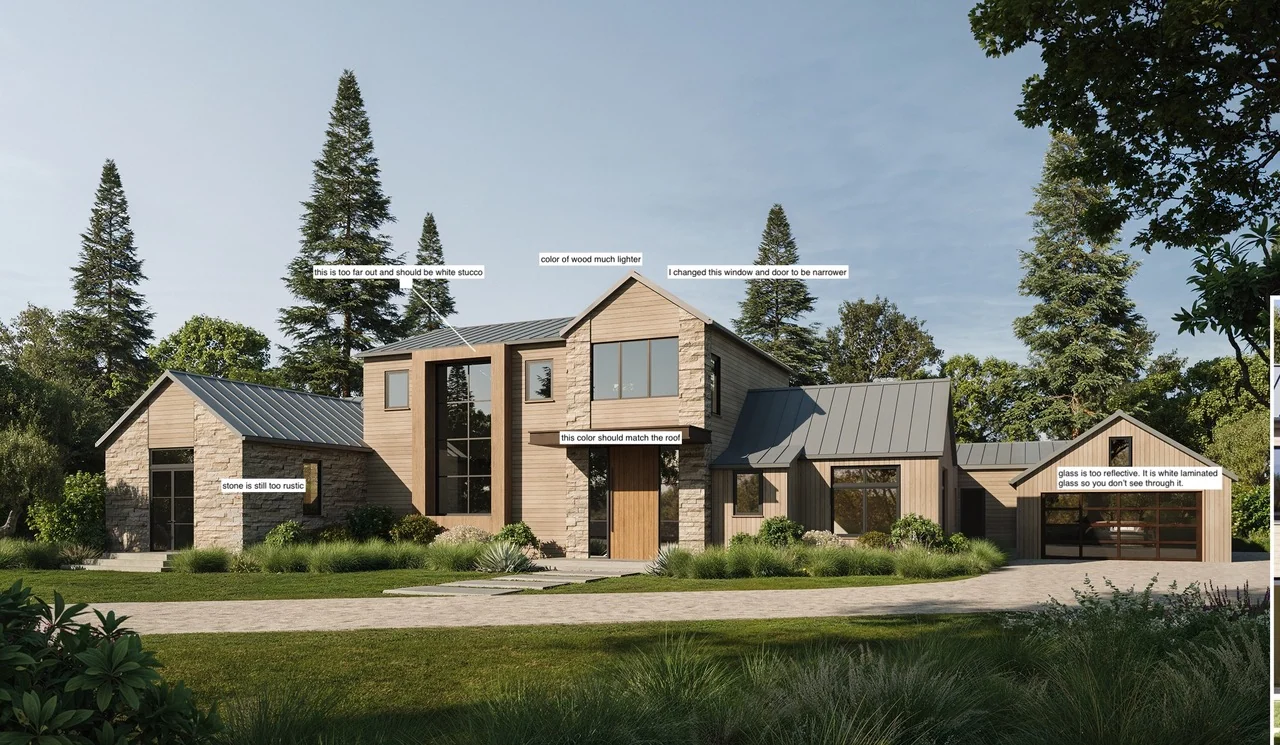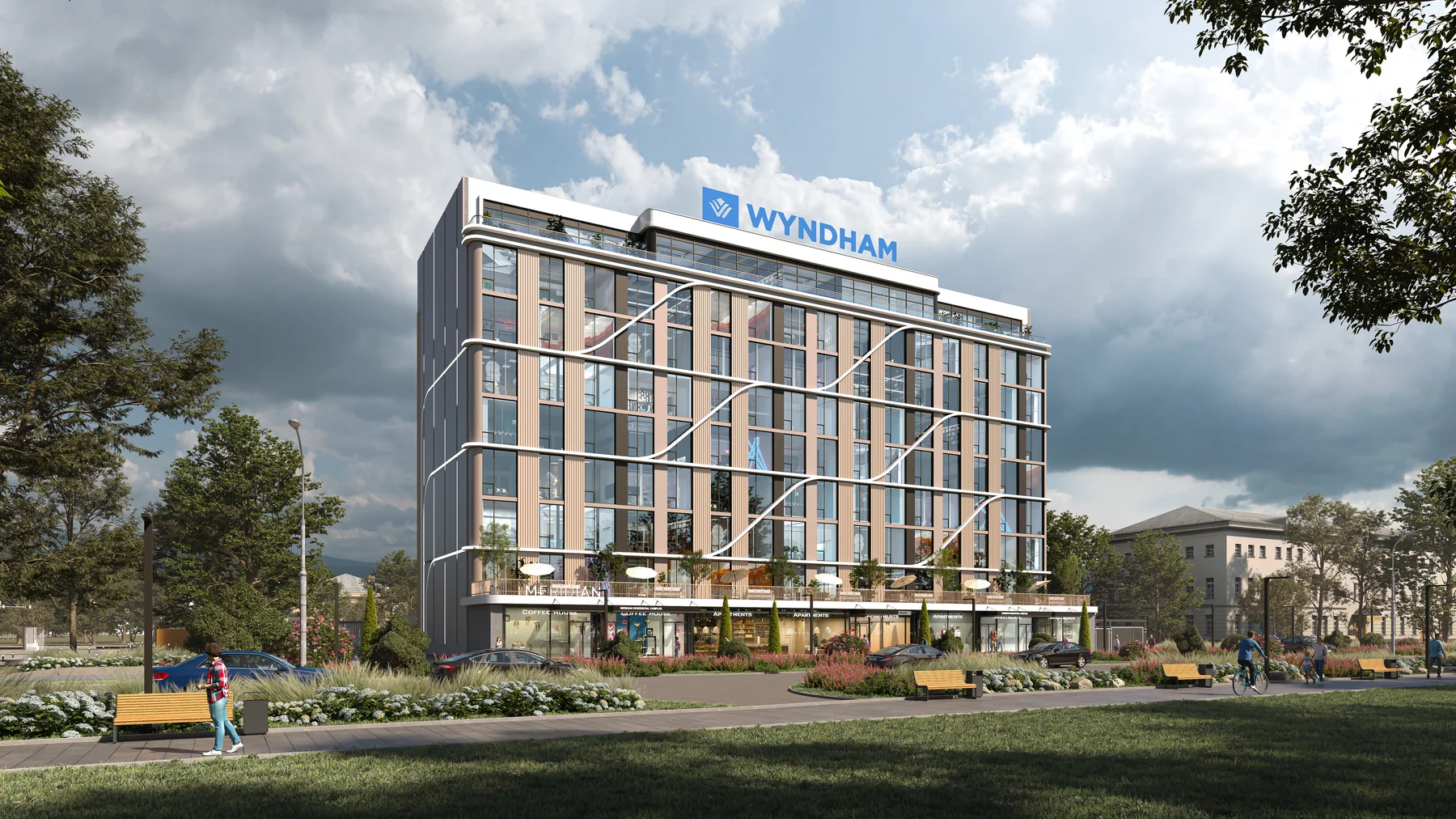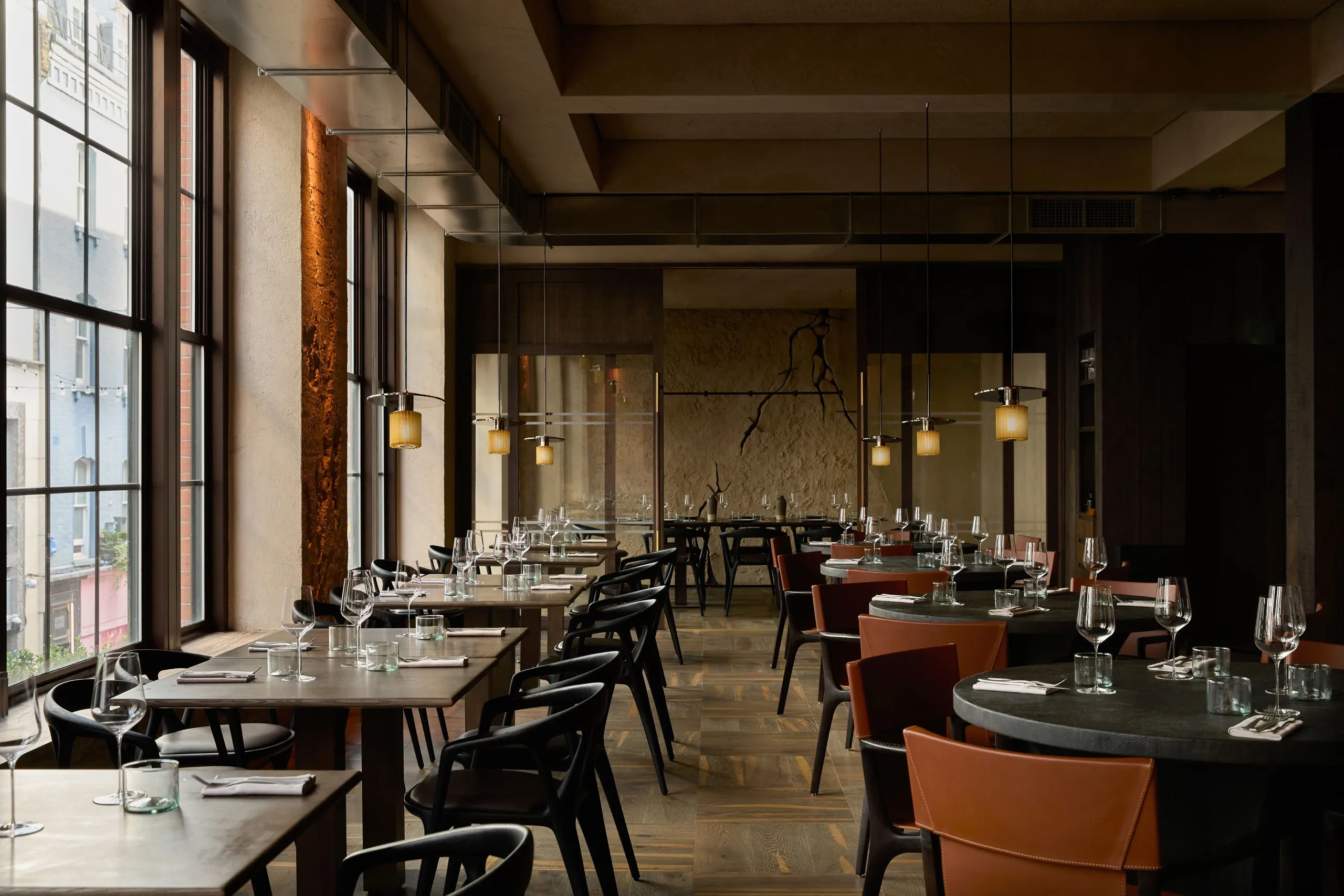
Somewhere around the second revision round, we'll often get a note that boils down to: "can you make it look a bit more like a photo for the brochure?" It's a fair ask, but it usually means the brief mixed two different jobs into one image – and once you separate them, the whole process gets faster.
A design render answers a question
Early in a project, a render's job is to help someone decide something: does this facade material read as intended from the street, does the massing work against the neighboring block, does the lobby feel too tight. These images are working documents. They can be a little rough around the edges – unfinished landscaping, a placeholder sky, generic figures – because the point is the geometry and the material, not the atmosphere.
A marketing render sells a feeling
A leasing hero shot or an investor deck cover has a completely different job: make someone want to be in that space. That means real weather, real light, people who look like they belong there, and a level of finish where nothing pulls focus from the building. It costs more time per frame because every element is doing emotional work, not just informational work.
Why naming the job upfront saves a round
When a brief says "design render" or "marketing render" instead of just "render," we know immediately how much time to put into staging, lighting and retouching – and the client isn't paying design-review rates for magazine-cover polish, or vice versa. If you're not sure which one you need yet, that's a completely normal place to start a conversation; we'll usually ask what the image needs to survive – a Zoom call or a billboard – and work backward from there.