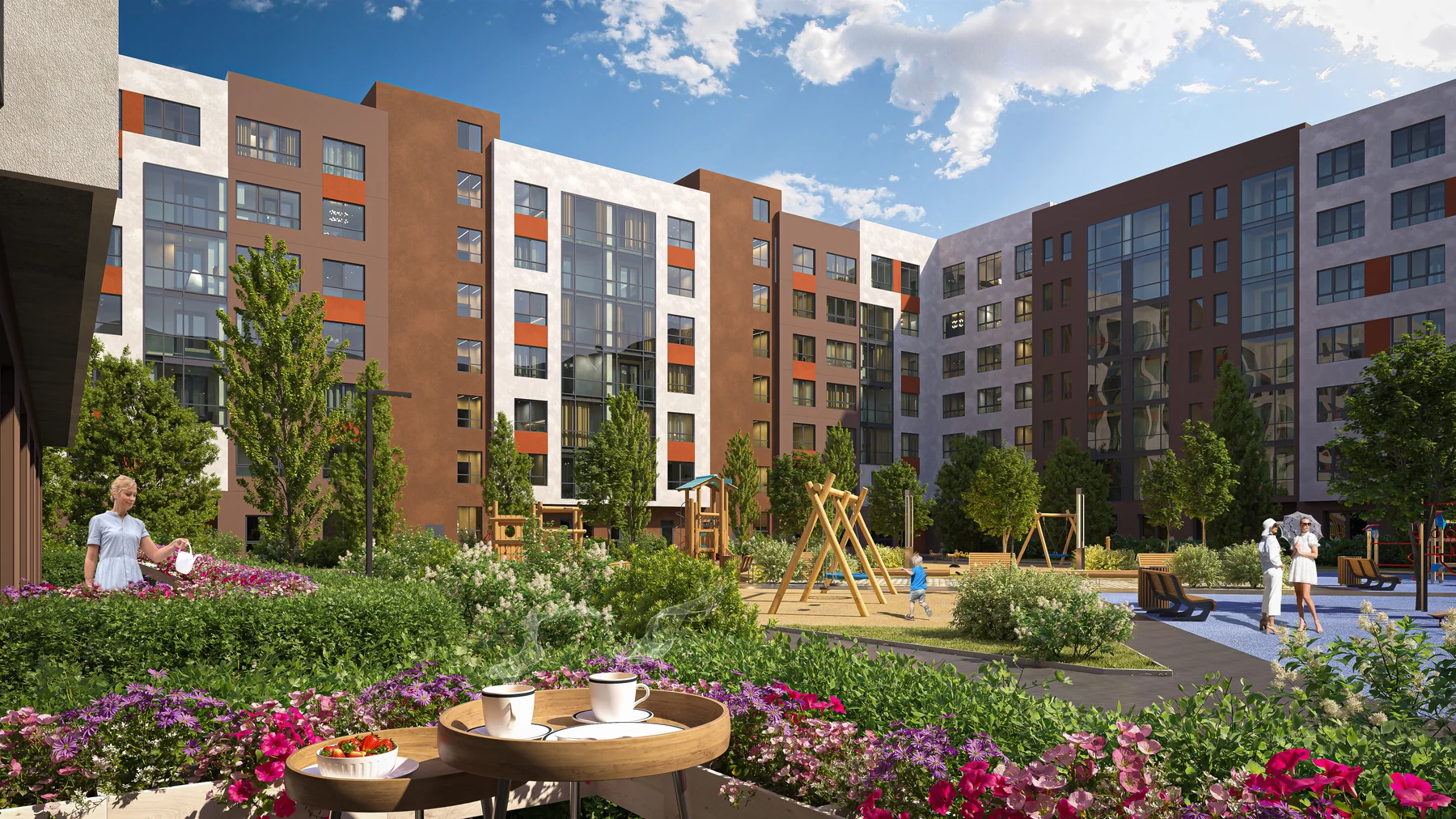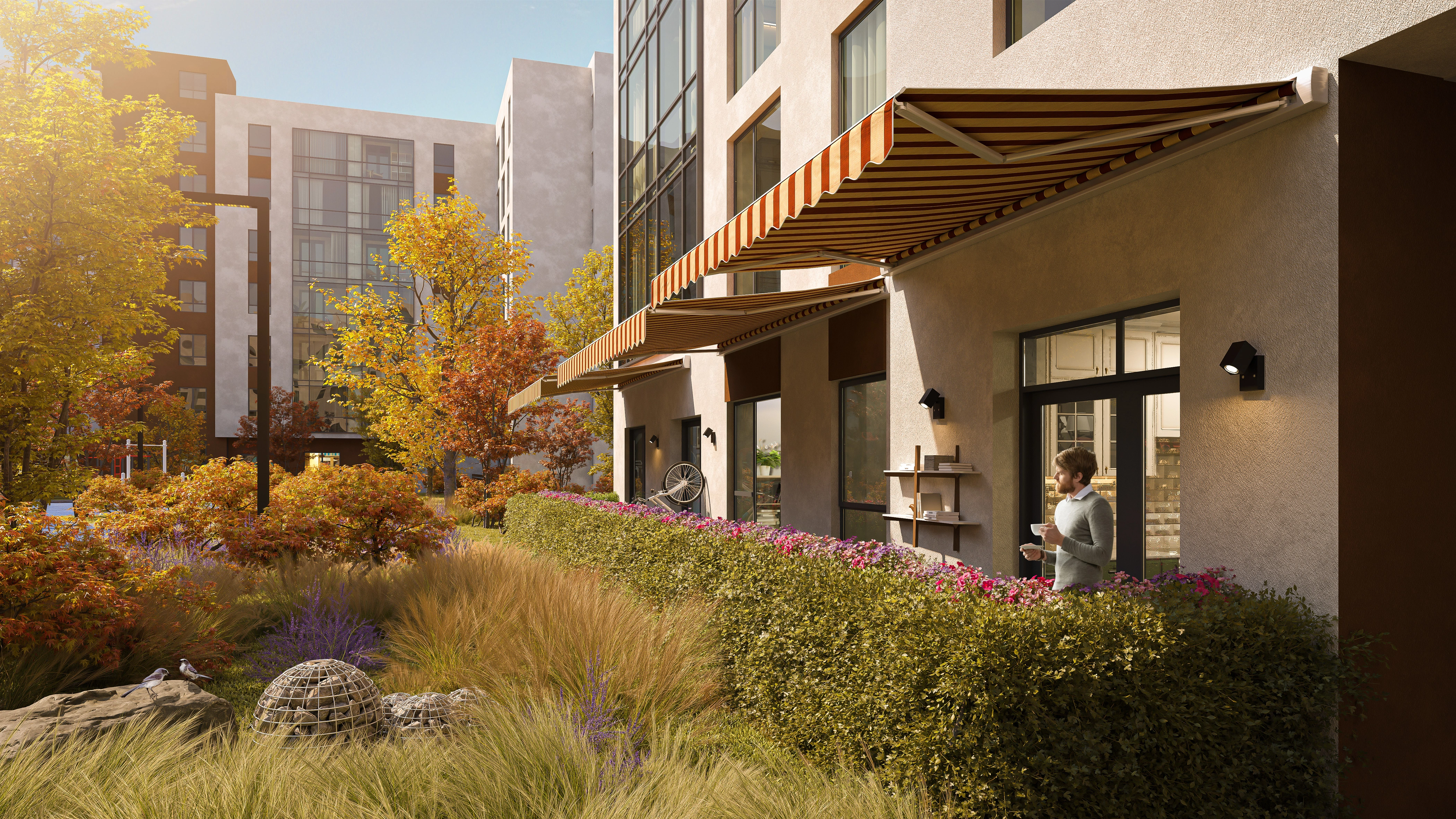
Most buildings only ever get rendered once, in one season, under one sky. That's usually the right call – but for the right project, showing the same courtyard in spring bloom, summer shade, autumn color and winter light does something a single hero shot can't: it proves the design actually works year-round, not just on the one perfect afternoon it was rendered for.
It's a design argument, not just a marketing one
Deciduous trees that shade a courtyard in July should let winter light through in January – a seasonal set is one of the few ways to actually demonstrate that a landscape plan was thought through across the calendar, not just staged for a single glamour shot. The same applies to material choices: a stone that photographs beautifully in golden-hour summer light needs to hold up under flat winter overcast too.
Consistency is the hard part
The building geometry, camera position and framing have to stay identical across every season – the entire point is a direct, credible comparison, and any drift in camera angle undermines that. What changes is foliage, ground cover, light angle and duration, sky condition, and – where it's part of the brief – how the space is being used, like a summer terrace becoming a lit winter gathering spot.
When it's worth the extra scope
A seasonal set is rarely the first image a project needs, but it's a strong addition for residential courtyards, campus quads, and any amenity space where "does this work in February too" is a legitimate question a buyer or tenant will ask. It's also simply a memorable way to close out a presentation – four moods of the same place, proven rather than promised.