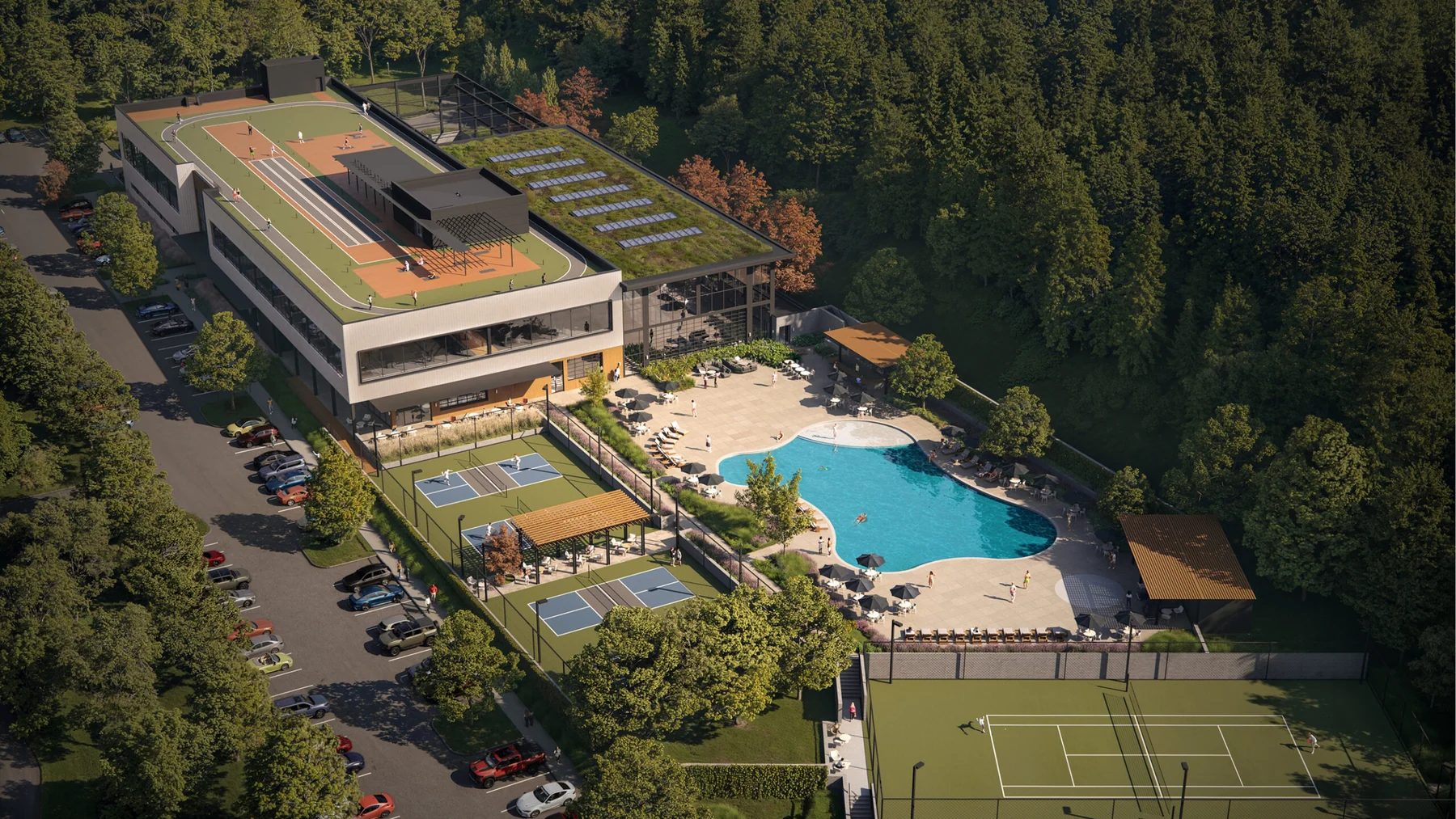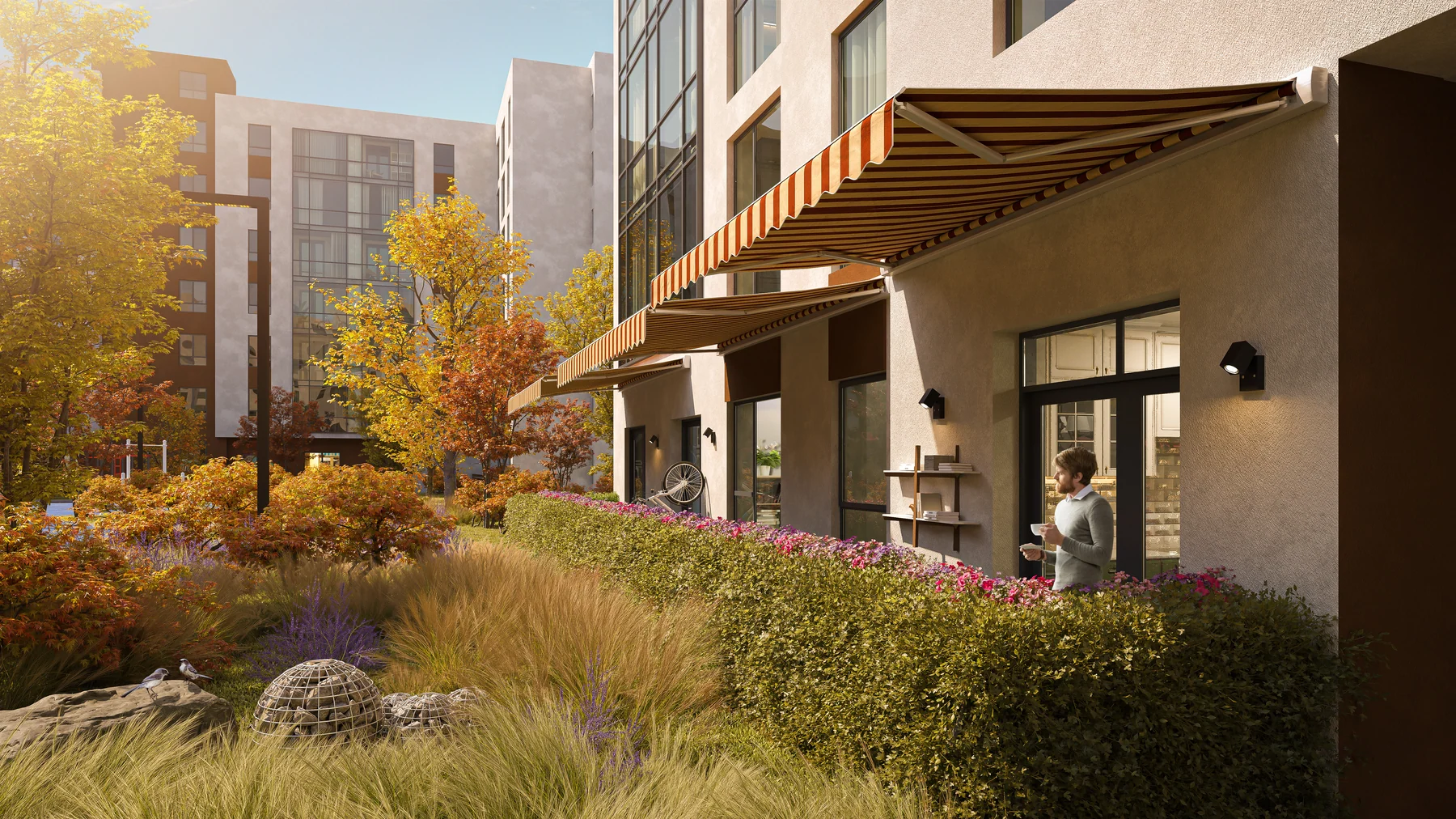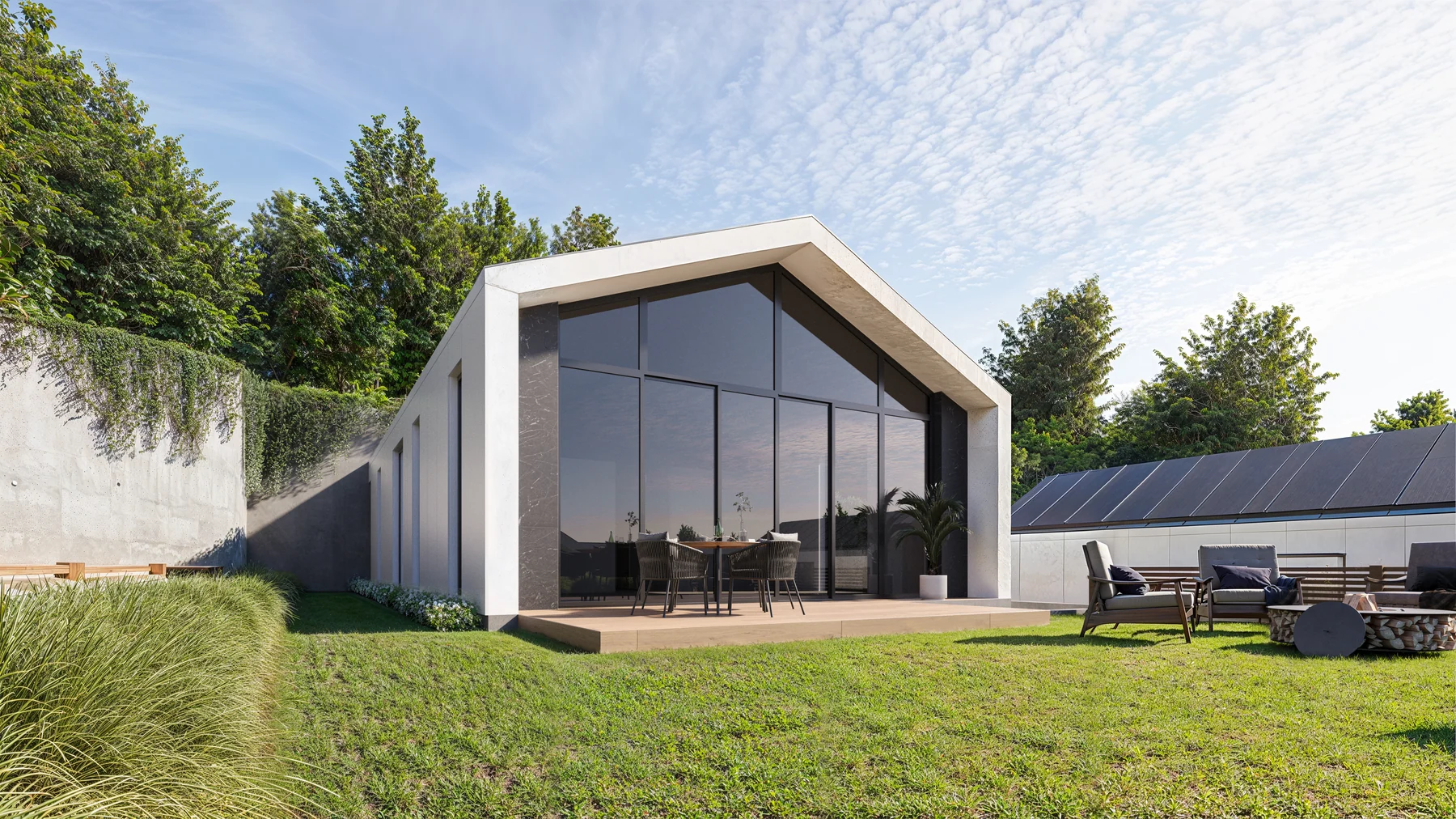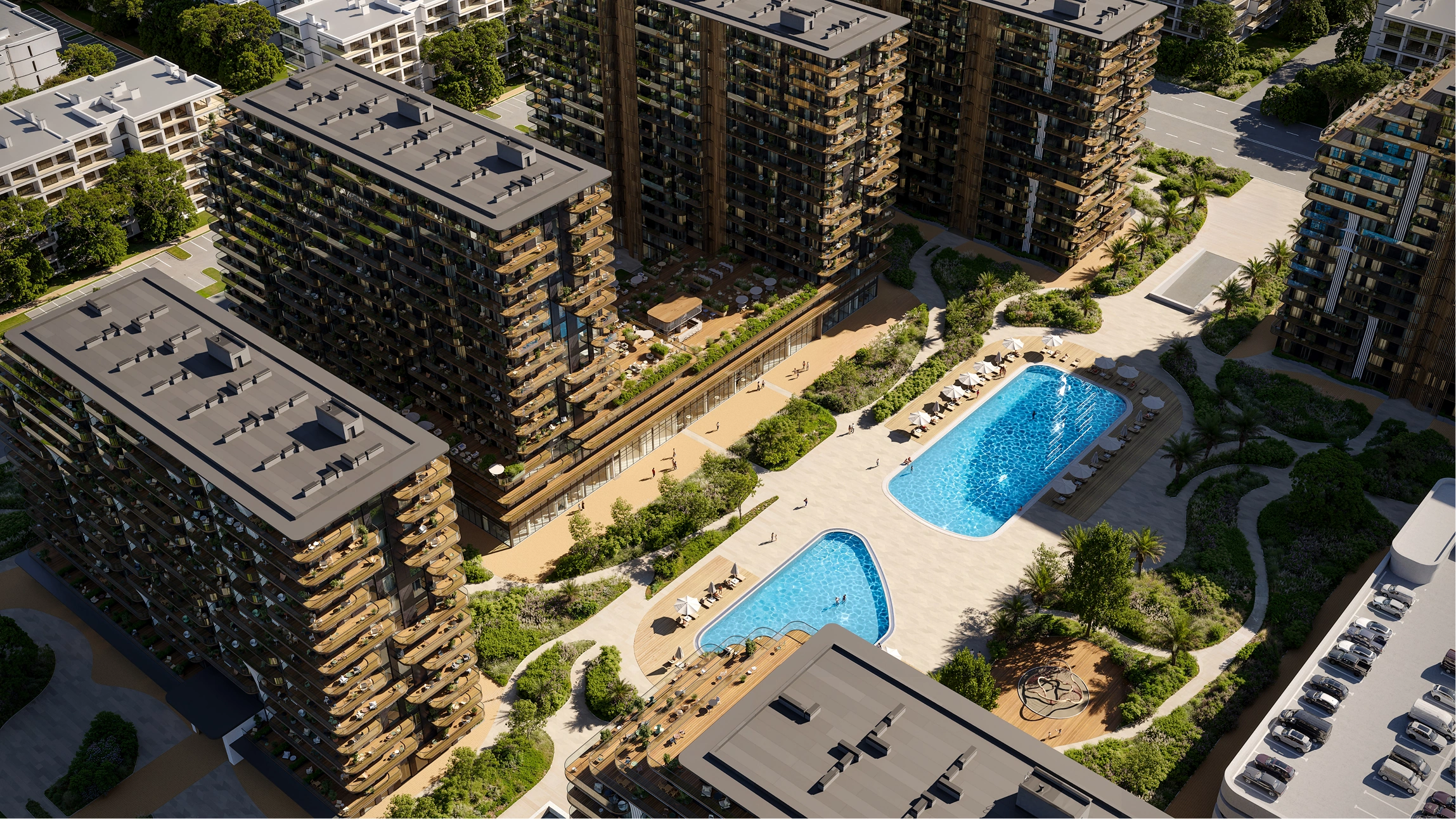
Ask someone what made a render feel real, and they'll usually mention the light or the reflections. They almost never mention the planting – and that's exactly why it matters. Landscaping does its job invisibly, and skipping it is one of the fastest ways to make an otherwise excellent building render feel slightly artificial.
Plants set the scale
A tree of the correct, local, mature species tells the eye how tall a building really is far more convincingly than a scale figure does – because we intuitively know roughly how tall a magnolia or an olive tree gets, and we calibrate everything else in the frame against it. Generic or oversized planting is a quiet way of making a building look shorter, or taller, than it actually is.
It has to belong to the climate
Palm trees on a render set in a temperate city read as wrong even to someone who couldn't name the species – it's a mismatch the eye catches before the conscious mind does. We match planting to the actual climate and, where it matters for the brief, the actual season, right down to whether deciduous trees should be in leaf.
Foreground softens, midground frames
A little foliage crossing into the foreground of a shot does real work: it adds depth, softens the transition from viewer to building, and gives the eye a natural resting point before it travels to the facade. Midground planting, meanwhile, is often what separates a building from looking like it's been pasted onto a site versus grown into one.
None of this is decorative in the way it might look – it's structural to whether an image reads as a real place. It's usually one of the last layers added, and one of the first things that would be missed if it were gone.