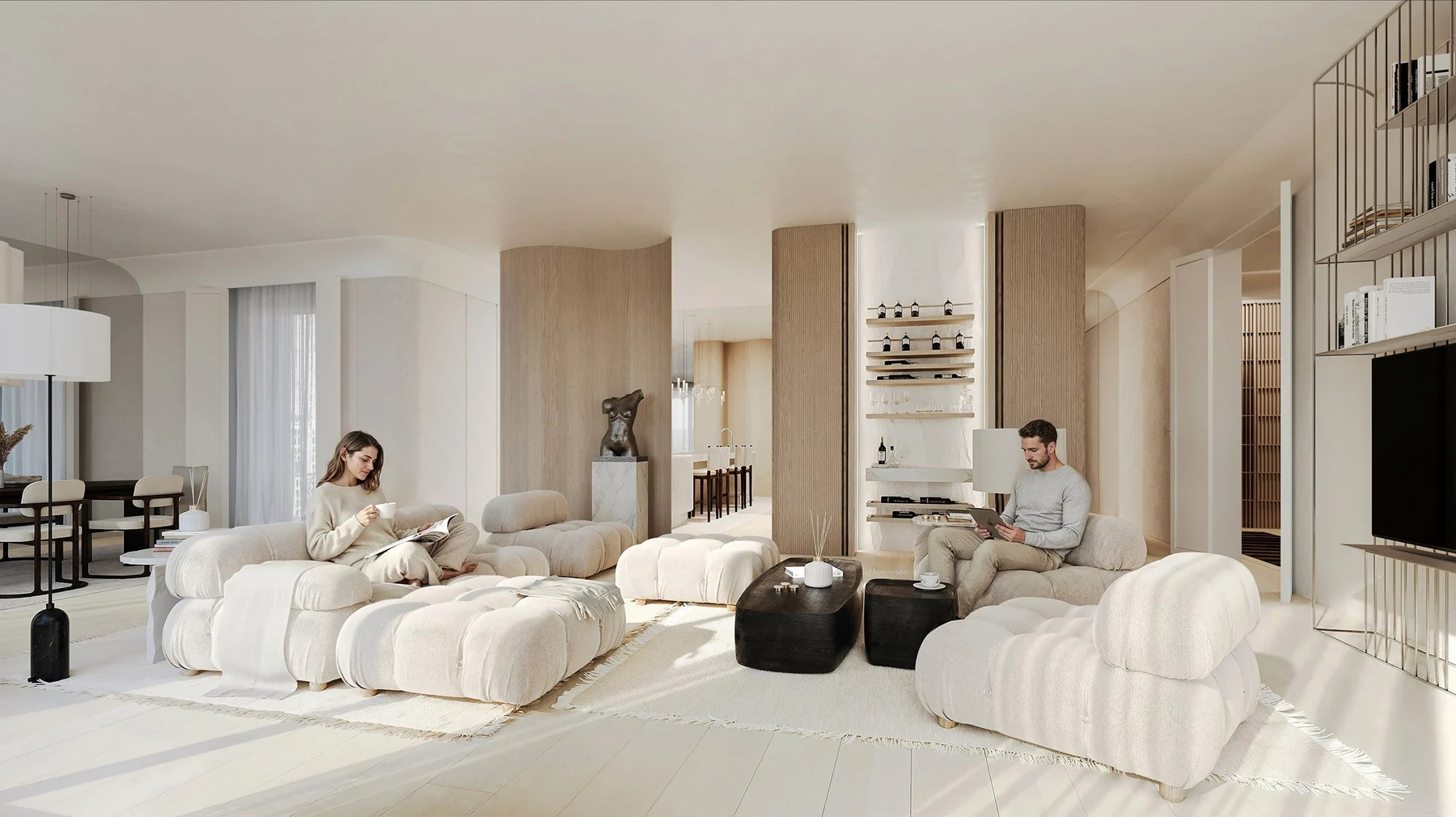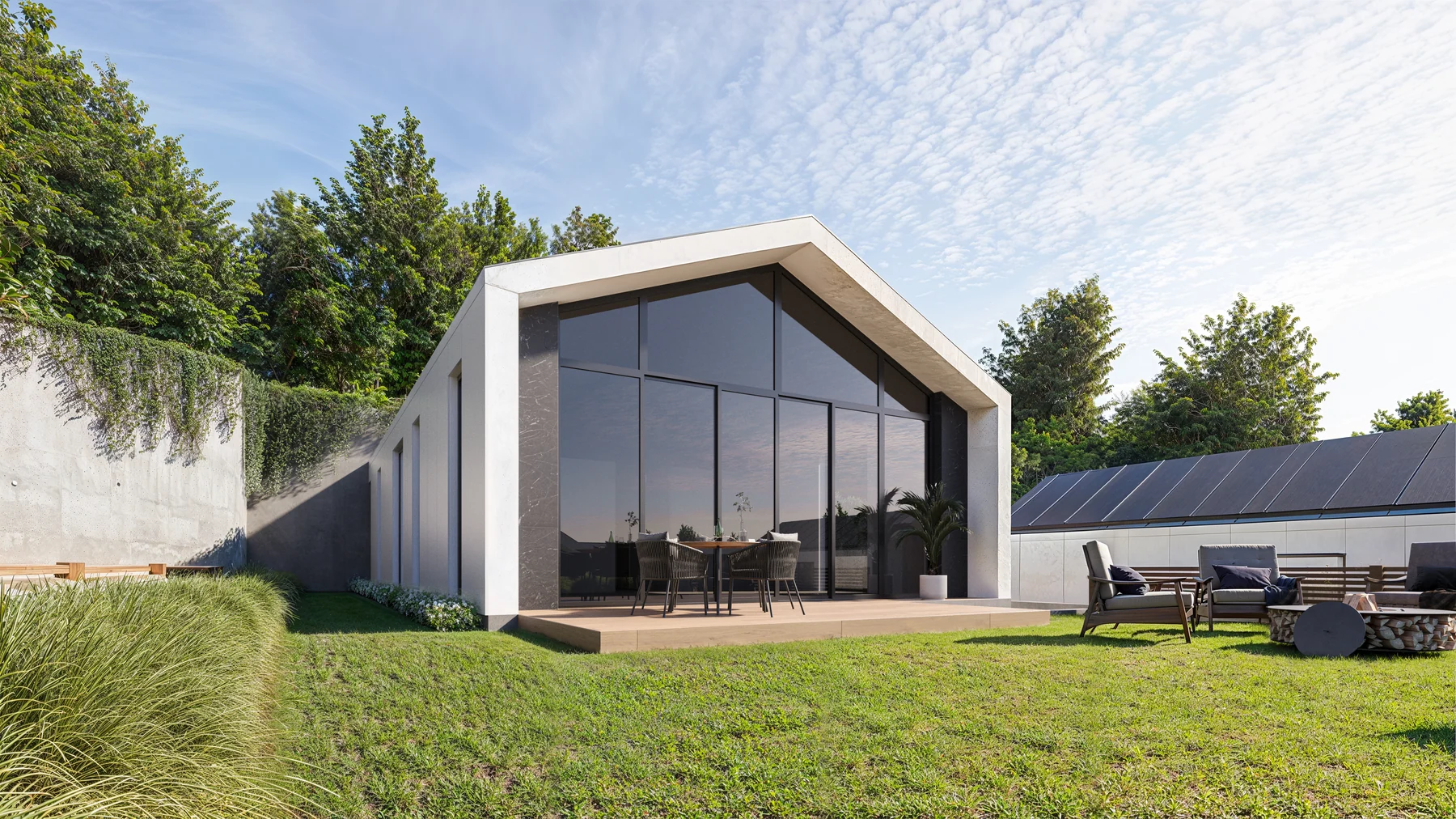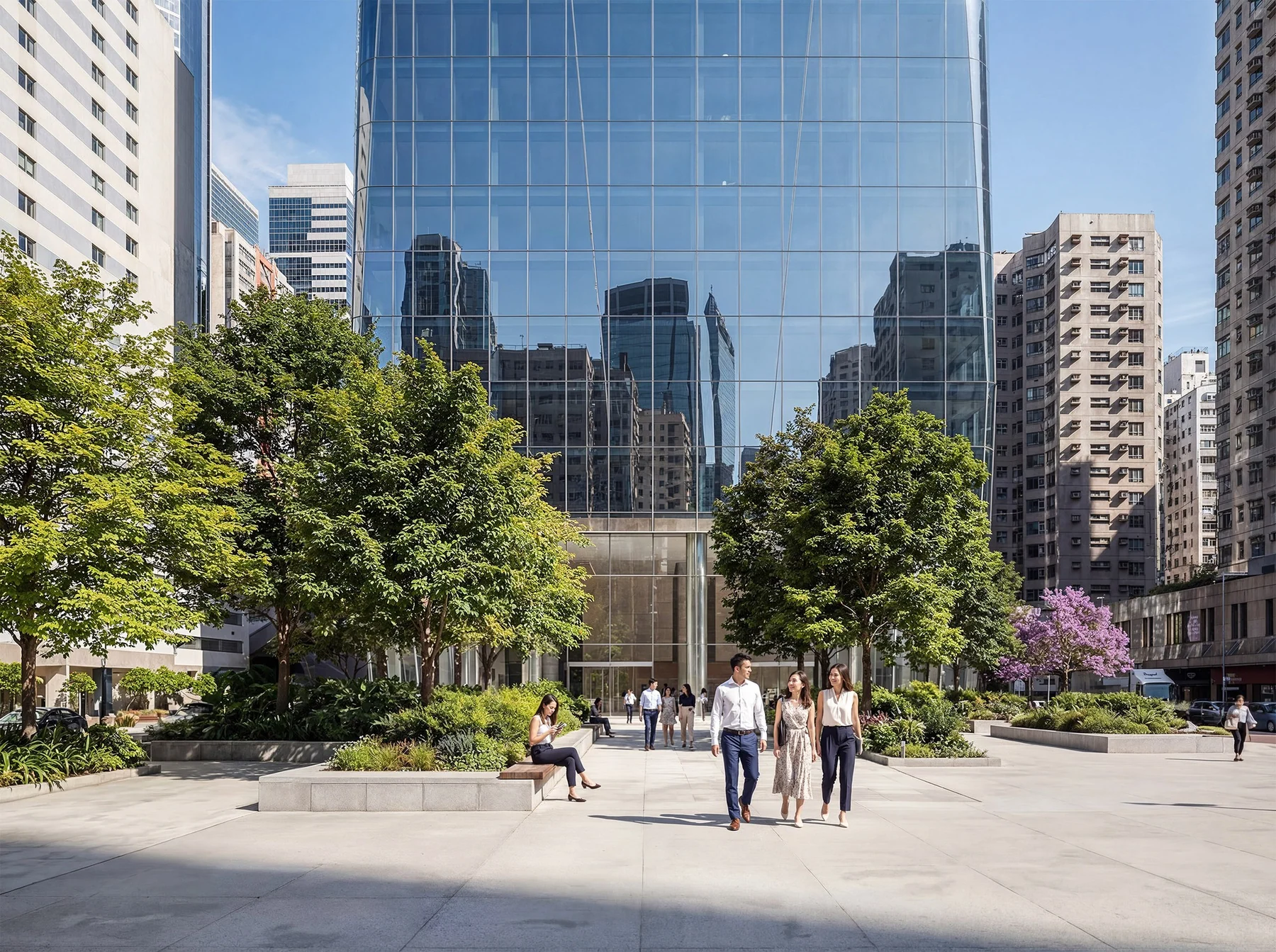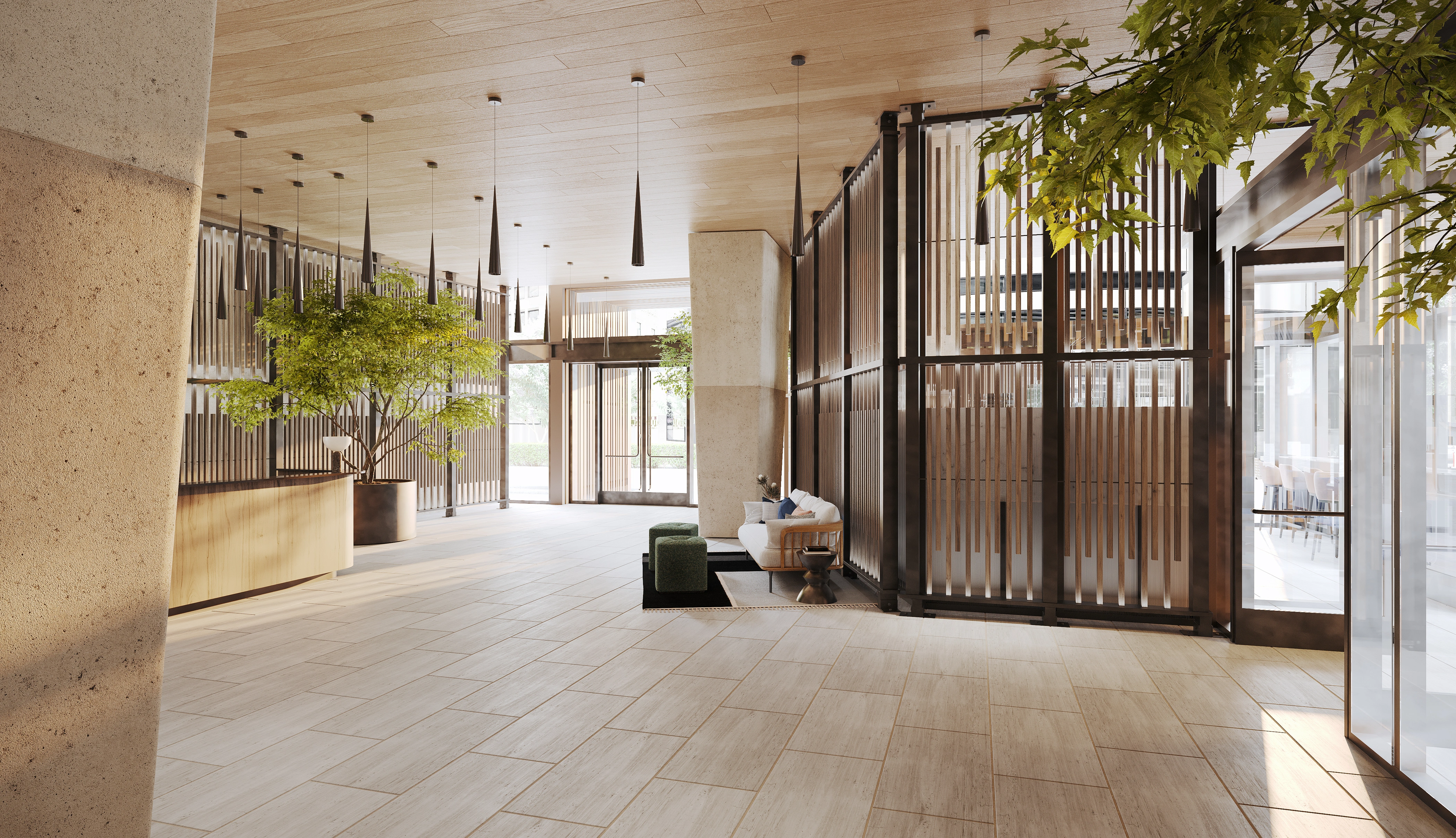
Nobody looking at a finished render consciously thinks "that travertine has the correct micro-roughness." But they notice, without being able to say why, when a material looks slightly wrong – and physically inaccurate materials are one of the fastest ways to tip a photoreal image into looking synthetic.
Light doesn't lie about materials
A real stone surface scatters light differently than a painted approximation of stone. Brushed metal, glazed tile, sheer curtain fabric – each has a specific way of catching highlights, absorbing shadow, and responding to the angle of view. Physically based rendering (PBR) workflows model these properties – roughness, reflectance, subsurface scattering – rather than faking a texture that only looks right from one angle under one light. That's why the same marble countertop can look convincing in a still and suddenly wrong the moment a camera moves past it in an animation.
Where the extra effort actually shows
Glazed tile is a good example: get the reflectivity slightly wrong and it reads as plastic. Water is another – real water refracts, catches caustics, and never sits perfectly flat under wind or fountain movement. We spend real time here specifically because these are the surfaces people touch in real life, so their eye is calibrated to notice when something's off, even if they couldn't describe what.
It's a discipline, not a filter
Physically accurate materials take longer to build and longer to render than a quick approximation, and most of that cost is invisible when the image is right – you only really see the payoff by comparison, or when it's missing. It's one of the areas where "good enough" and "actually good" produce almost the same thumbnail and a noticeably different full-resolution print.