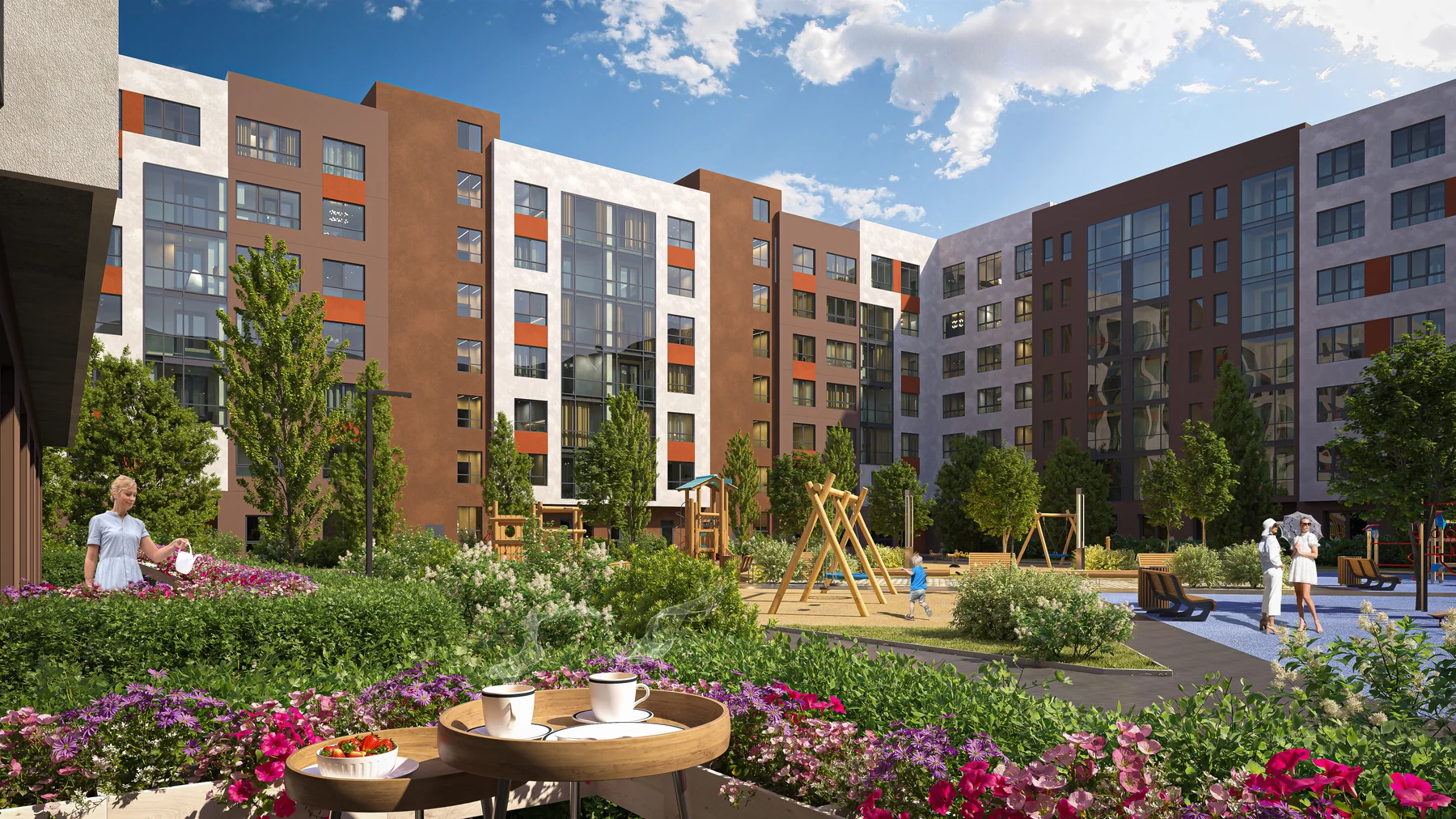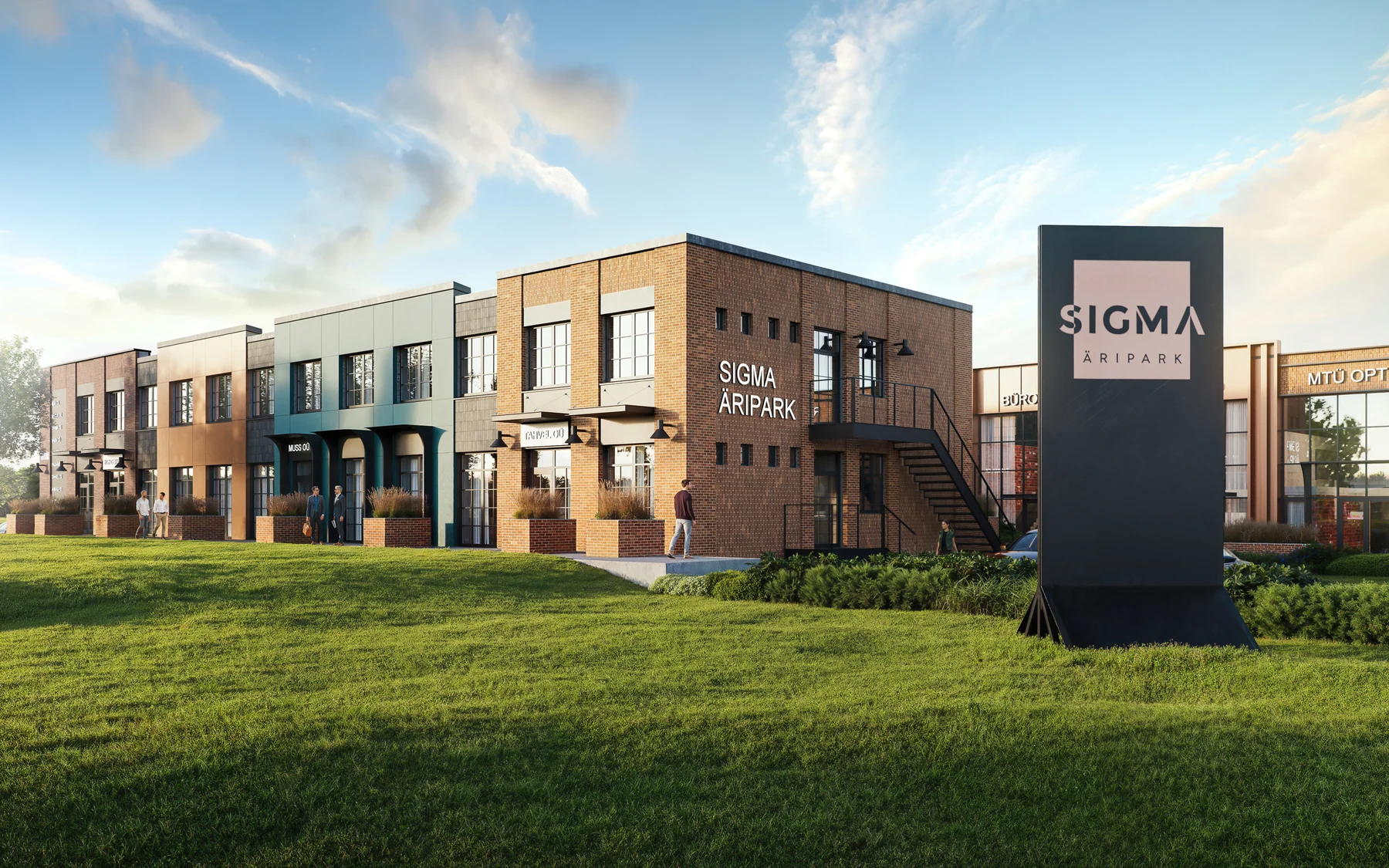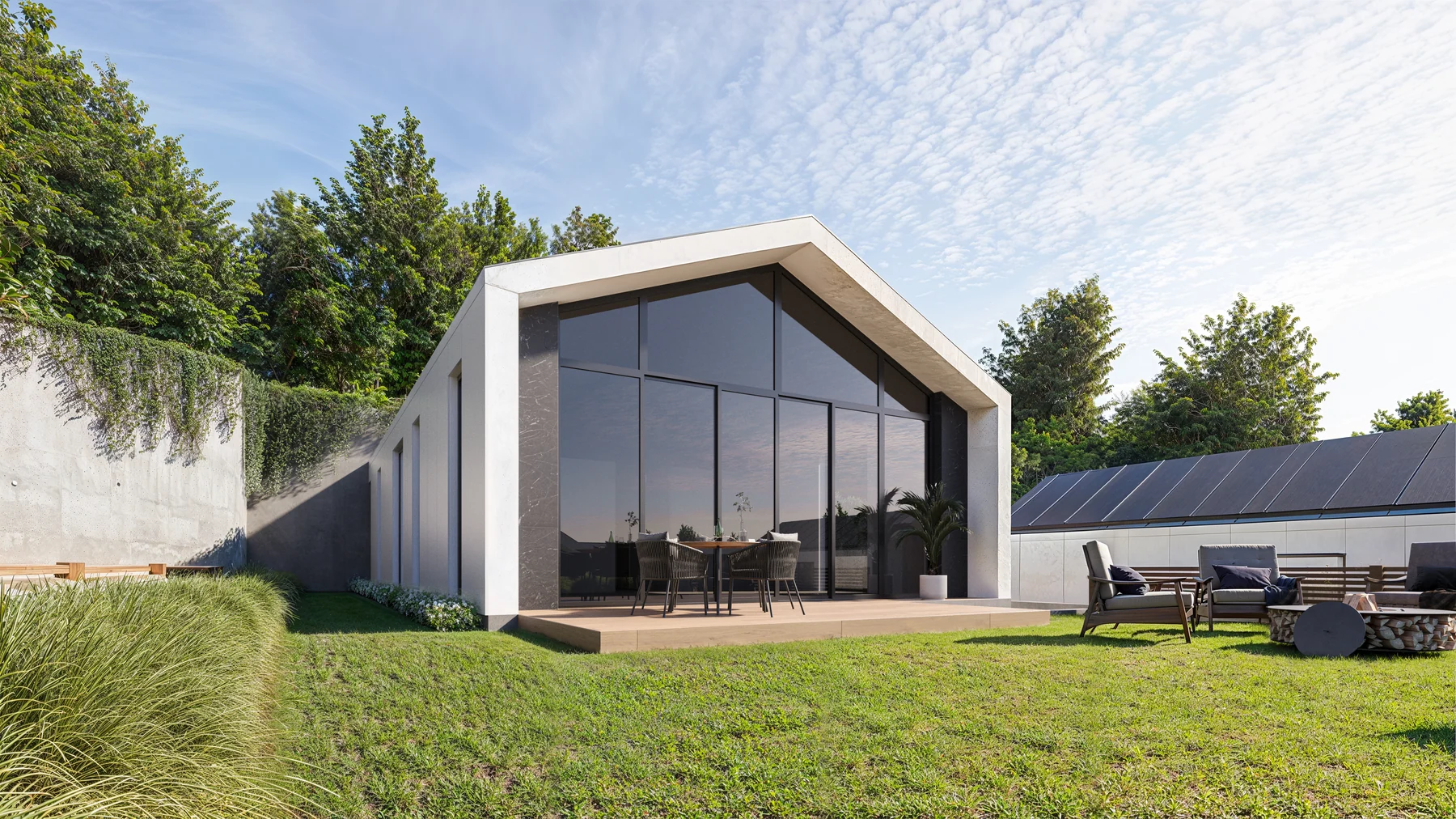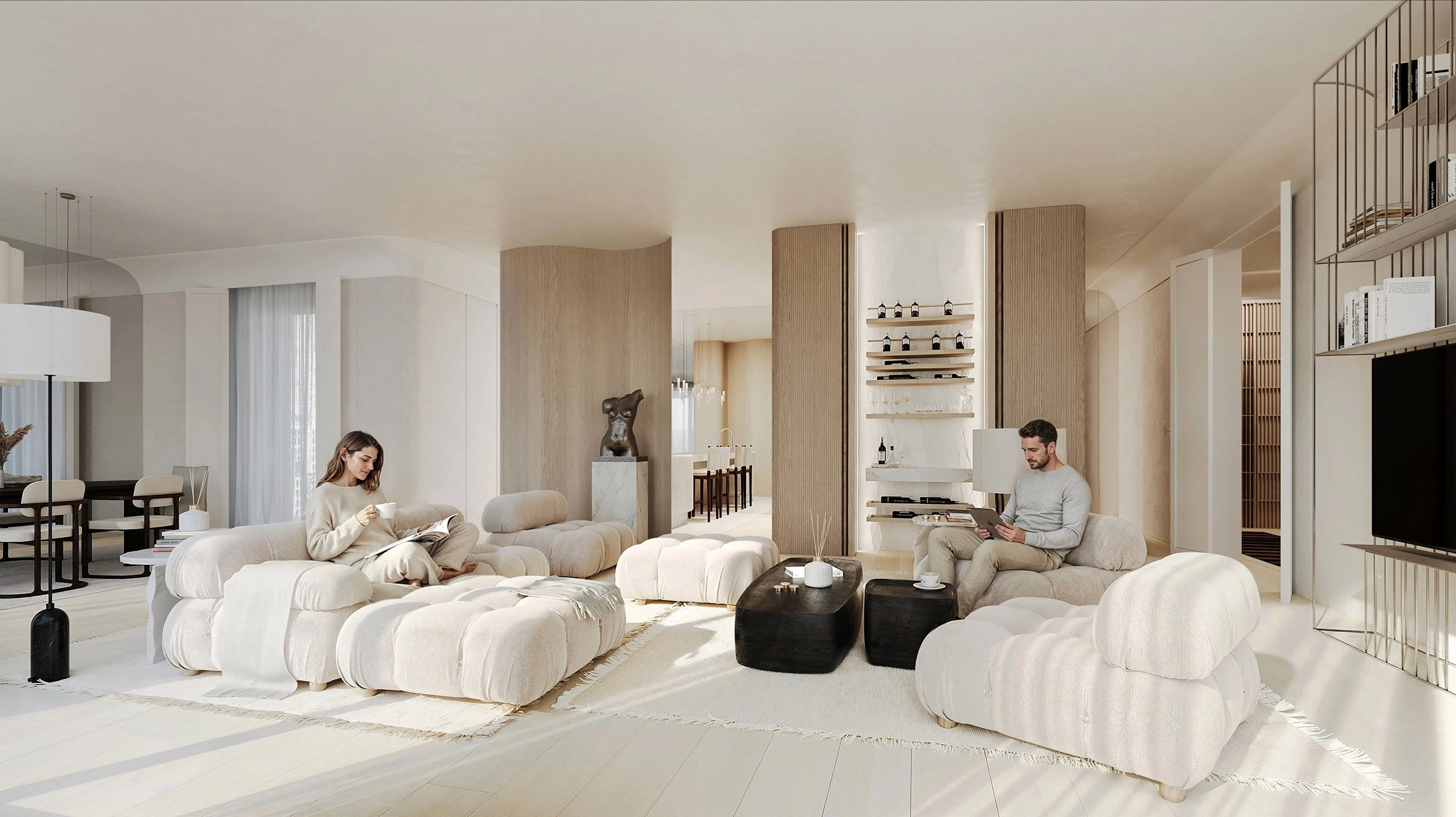
Ask most people what makes a render look "expensive," and they'll point at the materials – the marble, the brass, the timber grain. In our experience, it's almost always the light. Two scenes with identical geometry and materials can look like two entirely different budgets depending on how they're lit, so this stage of our process gets more iteration time than any other.
Choosing a time of day is a brief, not a preference
Before anyone touches a light rig, we ask what the image needs to communicate. A dusk shot with warm interior light glowing through glass reads as inviting and residential – it's the classic choice for a home or a hospitality lobby. A crisp midday exterior with hard, defined shadows reads as precise and institutional – common for office towers and civic buildings. A blue-hour city shot with light trails and illuminated signage reads as energy and scale, which is why it shows up so often for mixed-use and retail-anchored projects. The time of day is a communication choice before it's a lighting setup.
Physically correct, then art-directed
We build the base lighting to be physically accurate – real sun position for the actual site orientation, real sky models, real light falloff – because that's what makes materials read correctly. A physically wrong light will make even a well-modeled travertine facade look like plastic. Once that foundation is right, we art-direct on top of it: pulling exposure up or down in specific areas, softening a shadow that's reading too harsh, adding a practical light source that wouldn't naturally be as bright as it needs to be for the composition to work. Photography does the same thing – a real photographer bounces light, adds fill, waits for the right cloud. We're doing the digital version of the same job.
Interiors are their own discipline
Interior lighting has an added layer of complexity: multiple light sources – daylight through windows, ambient room lighting, practical fixtures – all interacting and bouncing off surfaces close to camera. Get the balance wrong and a room looks either flat and lifeless or blown out near the windows. This is where global illumination render settings matter most, and where the most render time typically goes on an interior scene.
The part clients don't usually see
Most of the lighting work in a project happens in versions the client never sees – the two or three variants we reject internally before landing on the one we send for review. That's by design. Lighting is one of the few parts of a render where "close enough" is genuinely visible to a non-technical eye, so it's worth the extra passes before anything goes out the door.