Everyday actions as the starting point
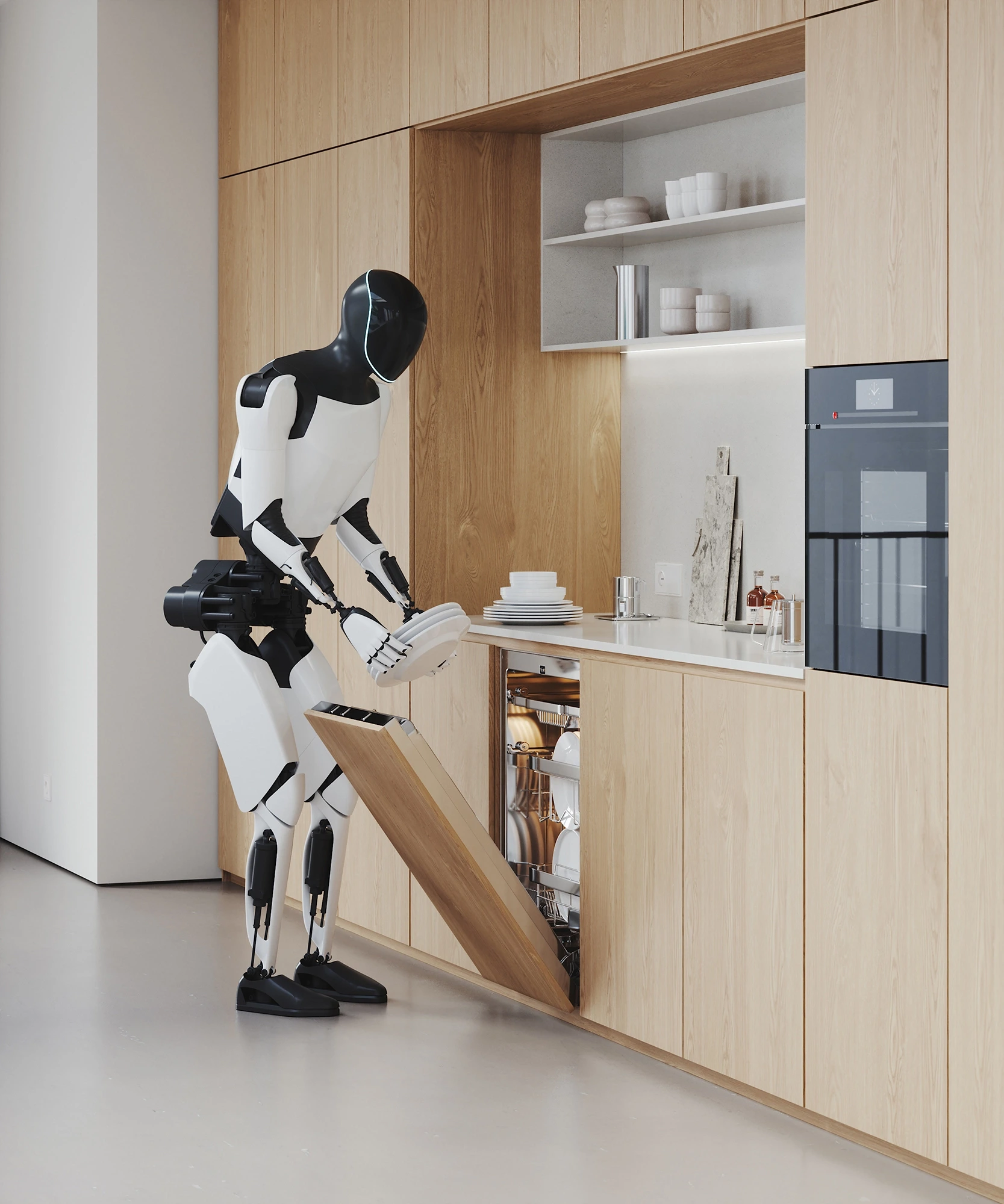
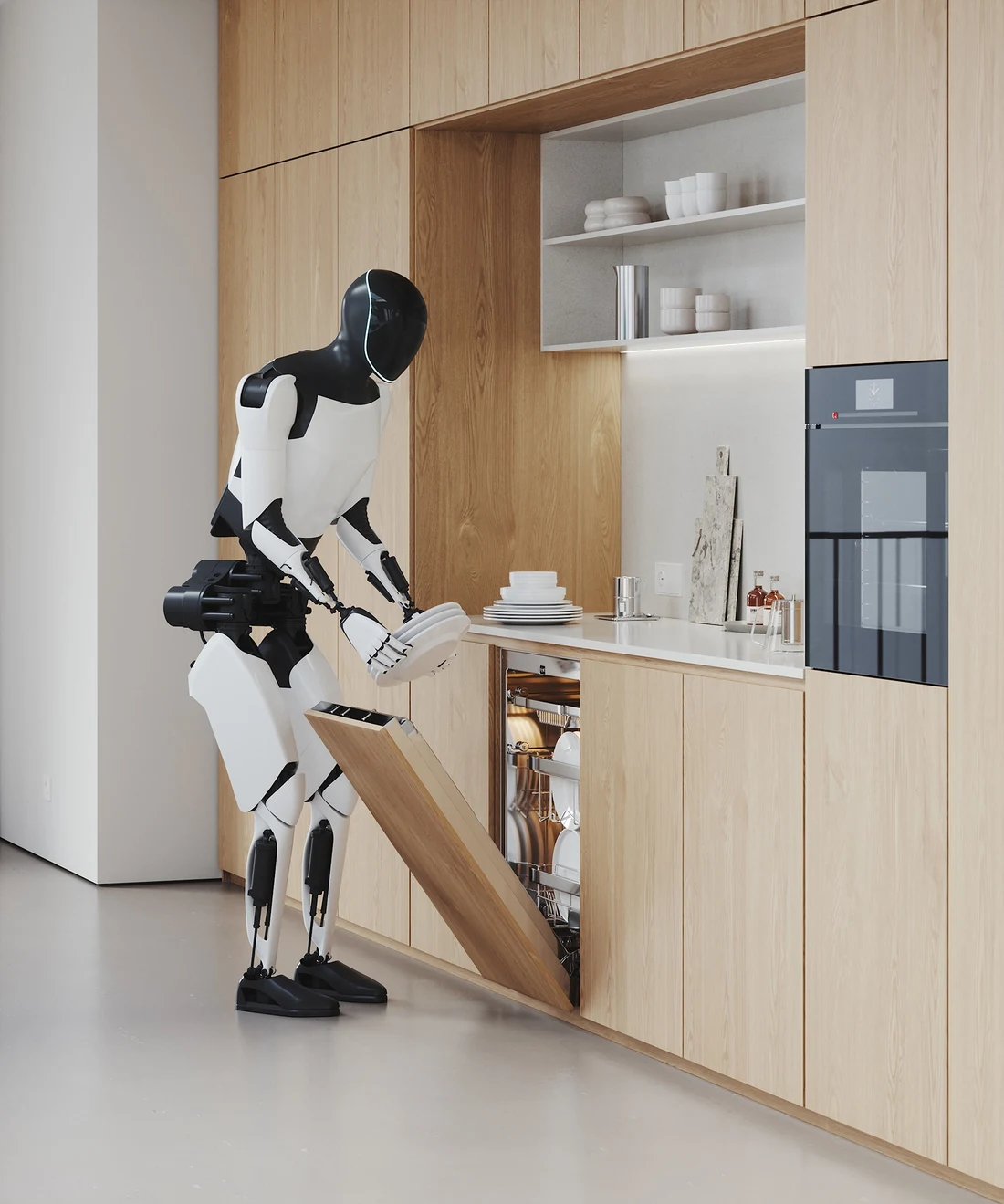
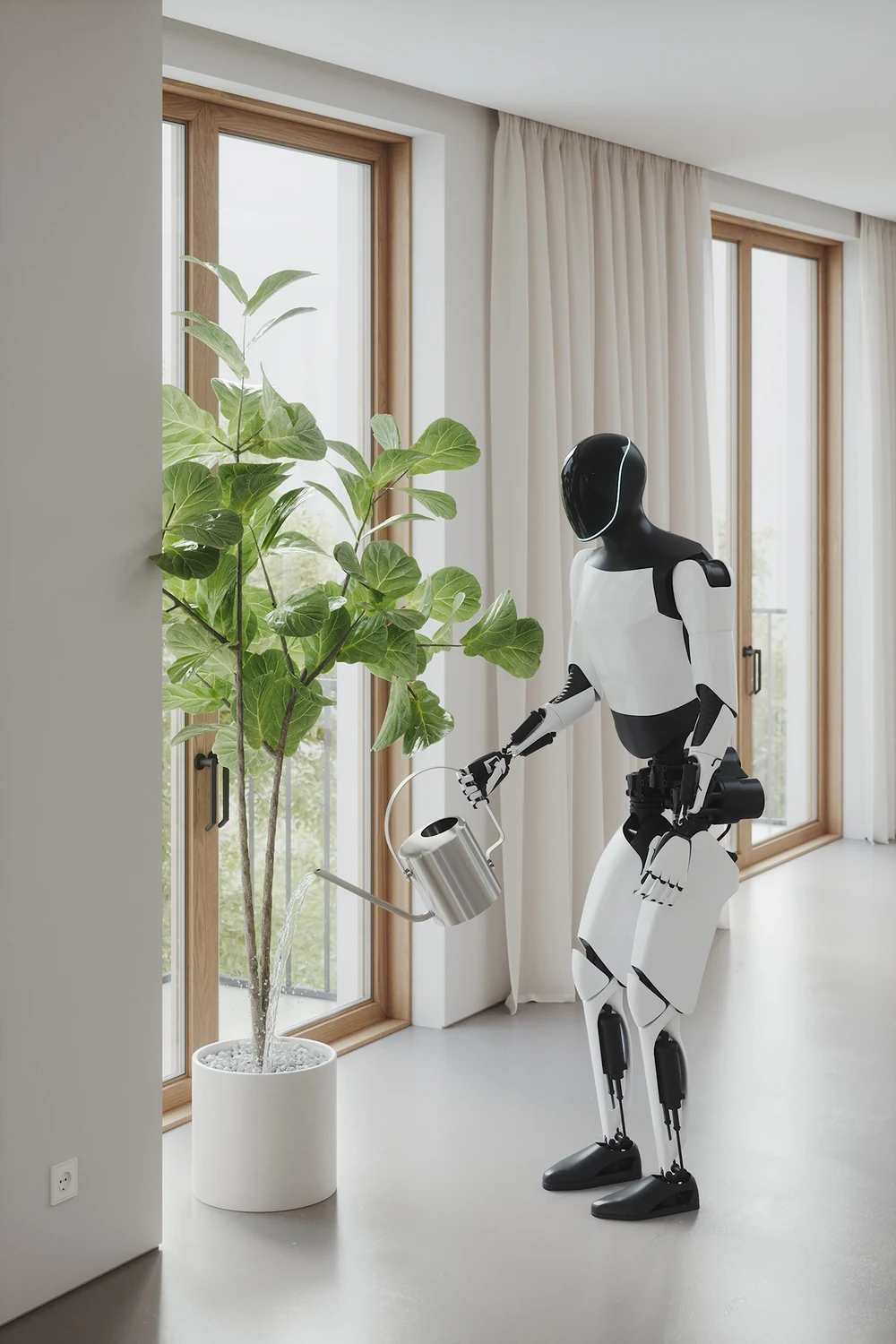
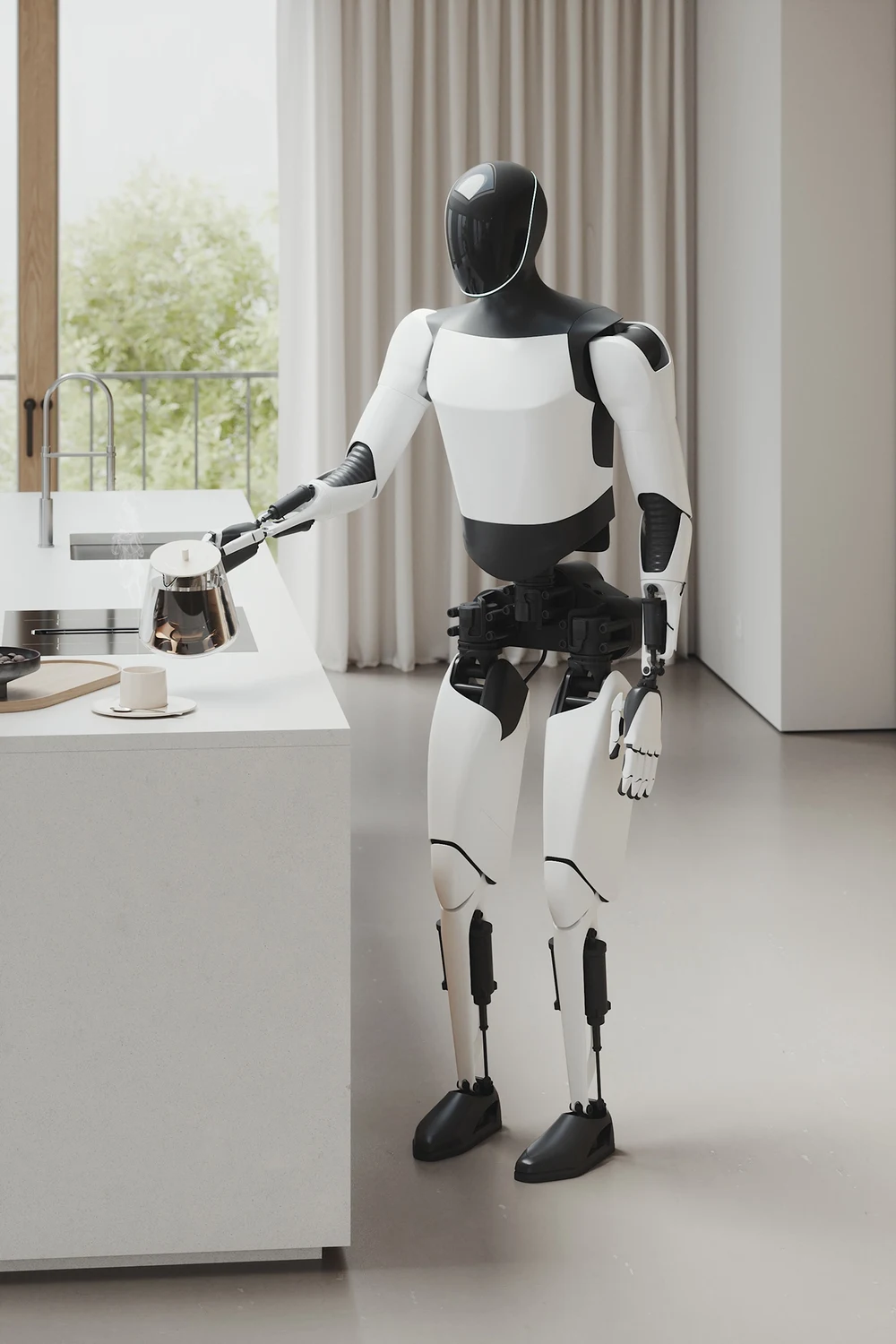
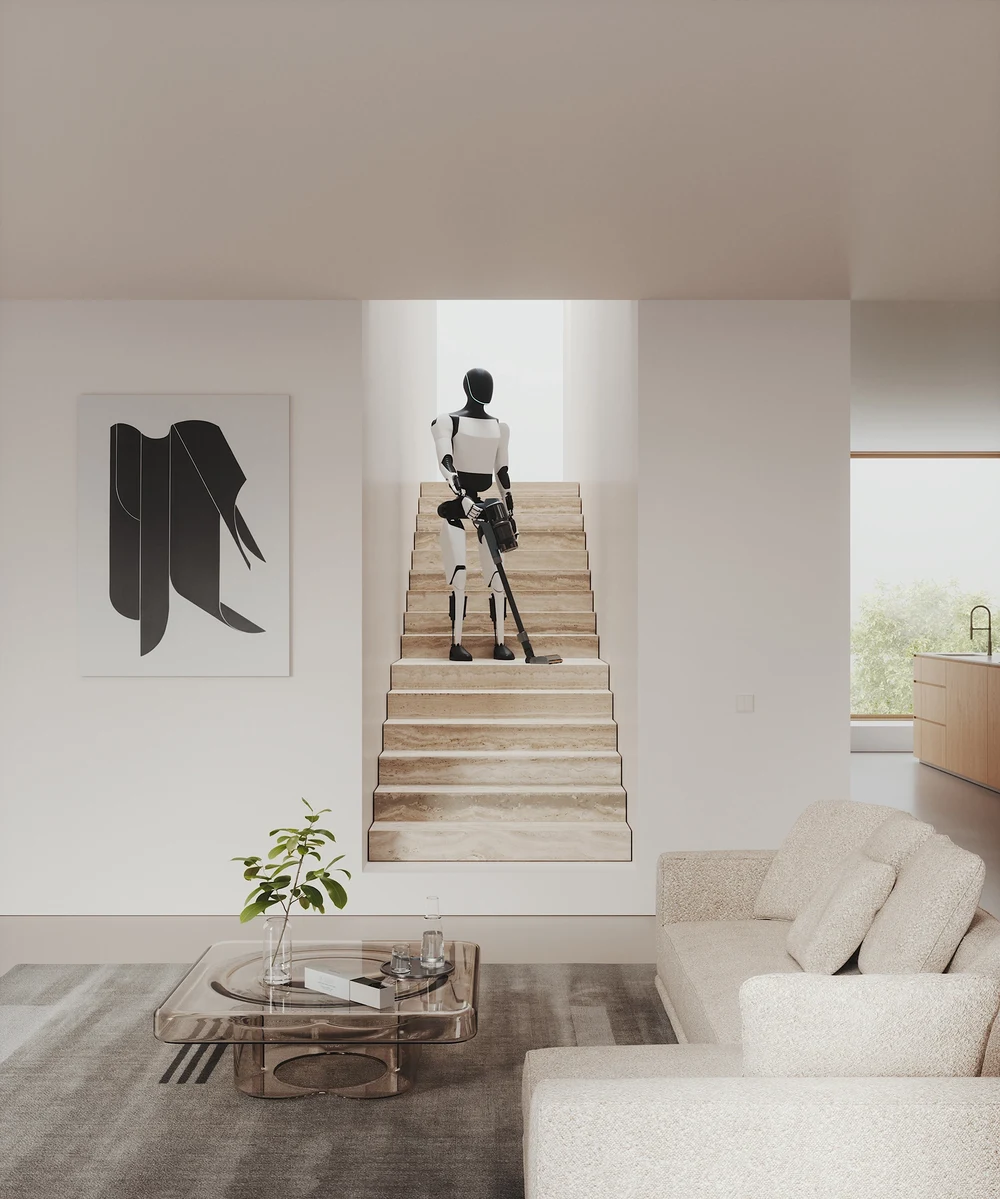
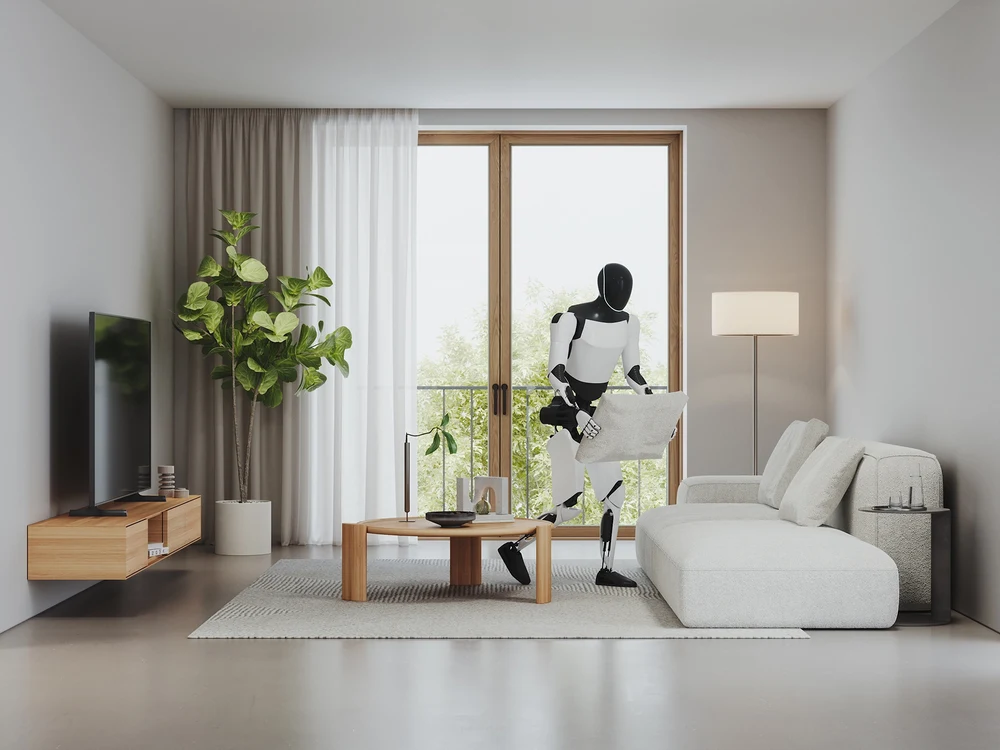
Straightening cushions, pouring coffee, loading the dishwasher, watering plants or vacuuming the stairs — the scenes draw on familiar situations. Two questions guide the staging: which action should the image convey, and how does the robot fit into the room? We coordinate grip positions, sightlines and the contact between hand and object around those questions.
One visual language for product and setting
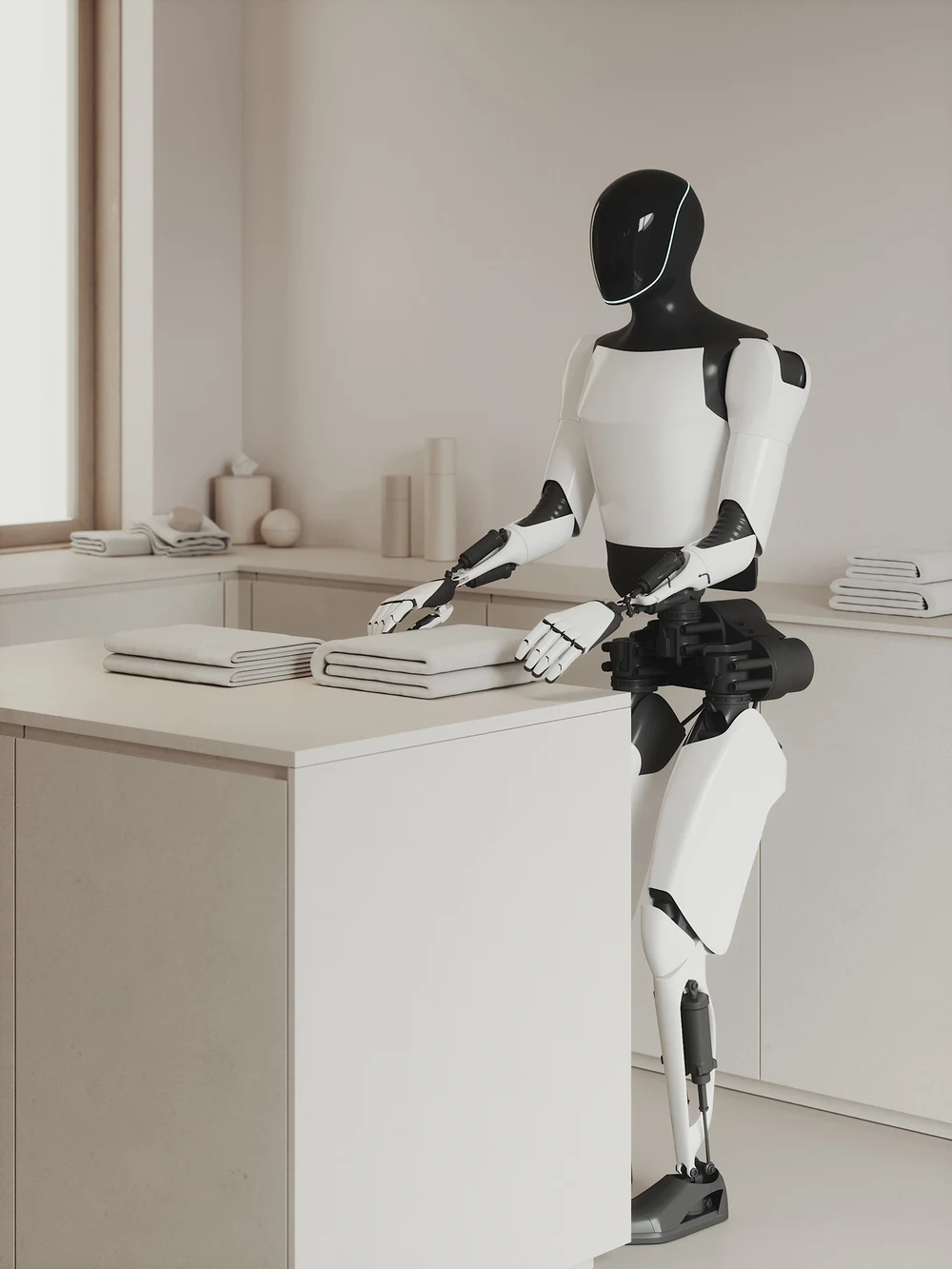
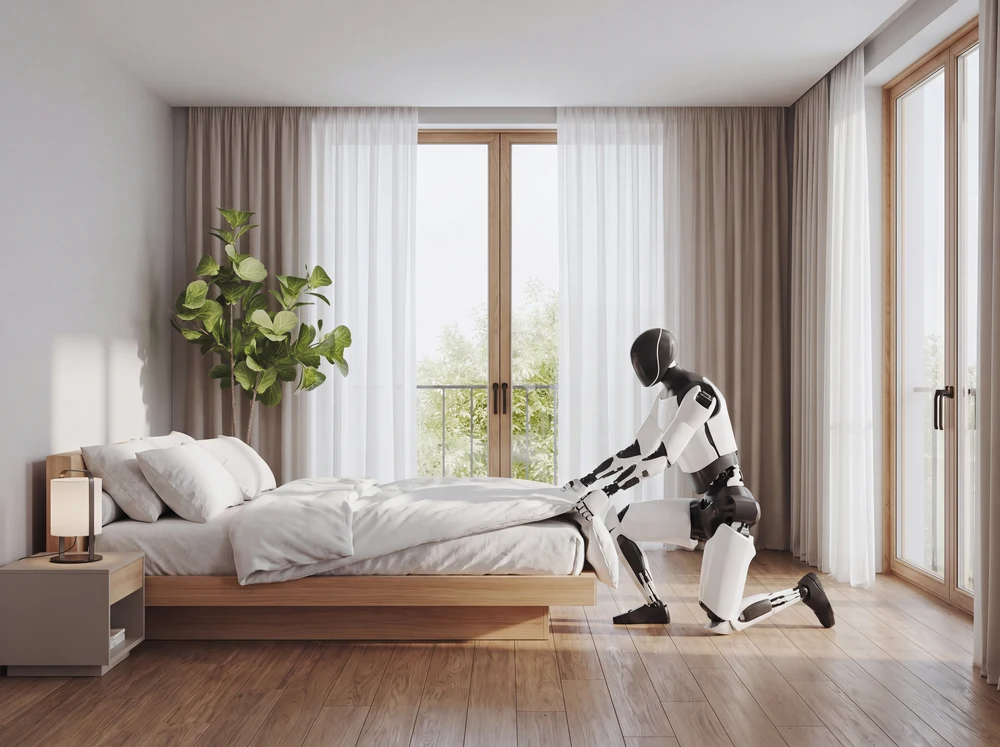
Matte white and graphite tones, soft edges and a few carefully chosen accessories define the series. The robot and the interiors share a restrained design language, with warm wood and textiles contrasting deliberately against the mechanical components.
Simple architecture, clear actions
Our interior designers kept the rooms deliberately restrained — clear volumes, quiet surfaces, a small material palette. A cup, cushion, watering can or vacuum cleaner establishes the scene; lines and open space draw the eye to the contact between hand and object, while small highlights define material edges.
Planning image formats before rendering
We plan format variations before rendering: 16:9 for product pages, 4:5 or 1:1 for social media, and 9:16 for stories. Close details and wider interior views serve different purposes, and each composition responds to the action and the intended use of the image. These renderings demonstrate our approach to imagery — they don't verify a robot's technical capabilities.