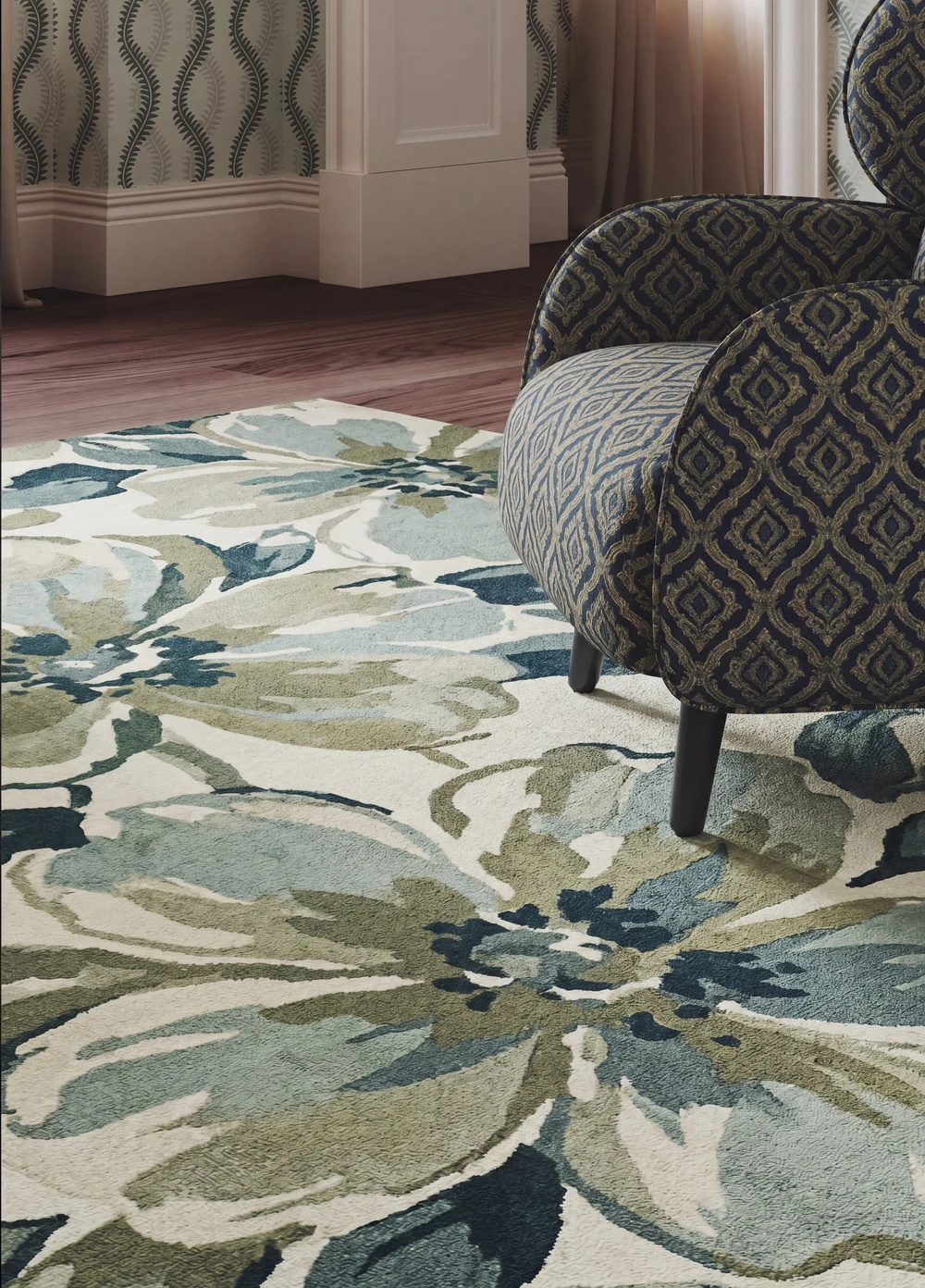
The choreography of two patterns
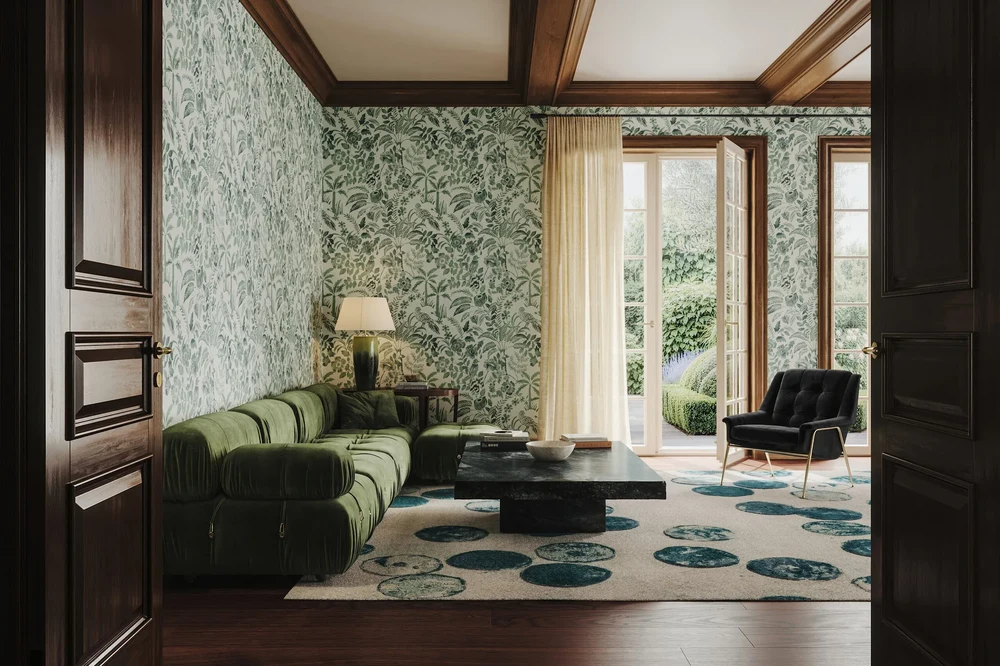
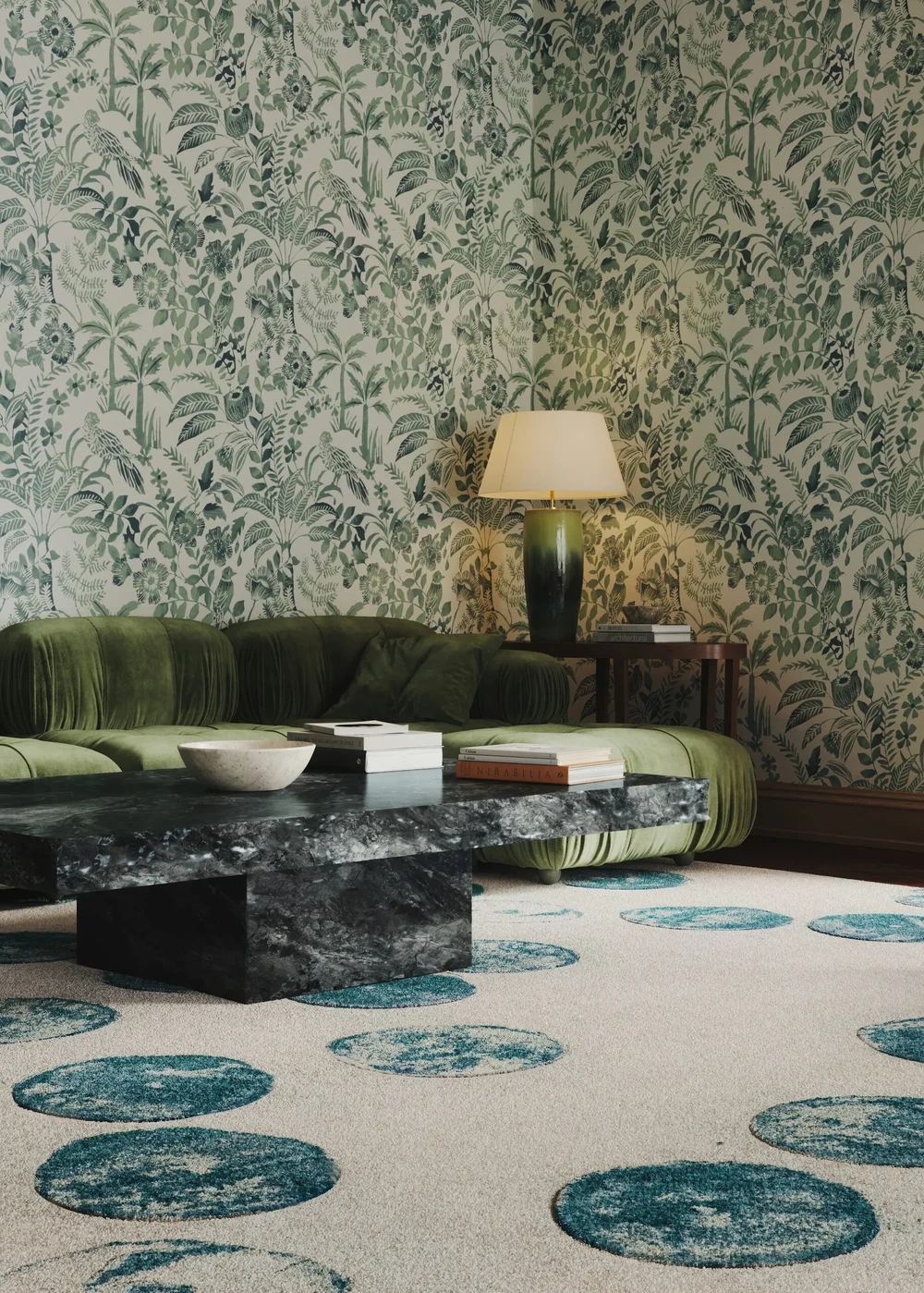
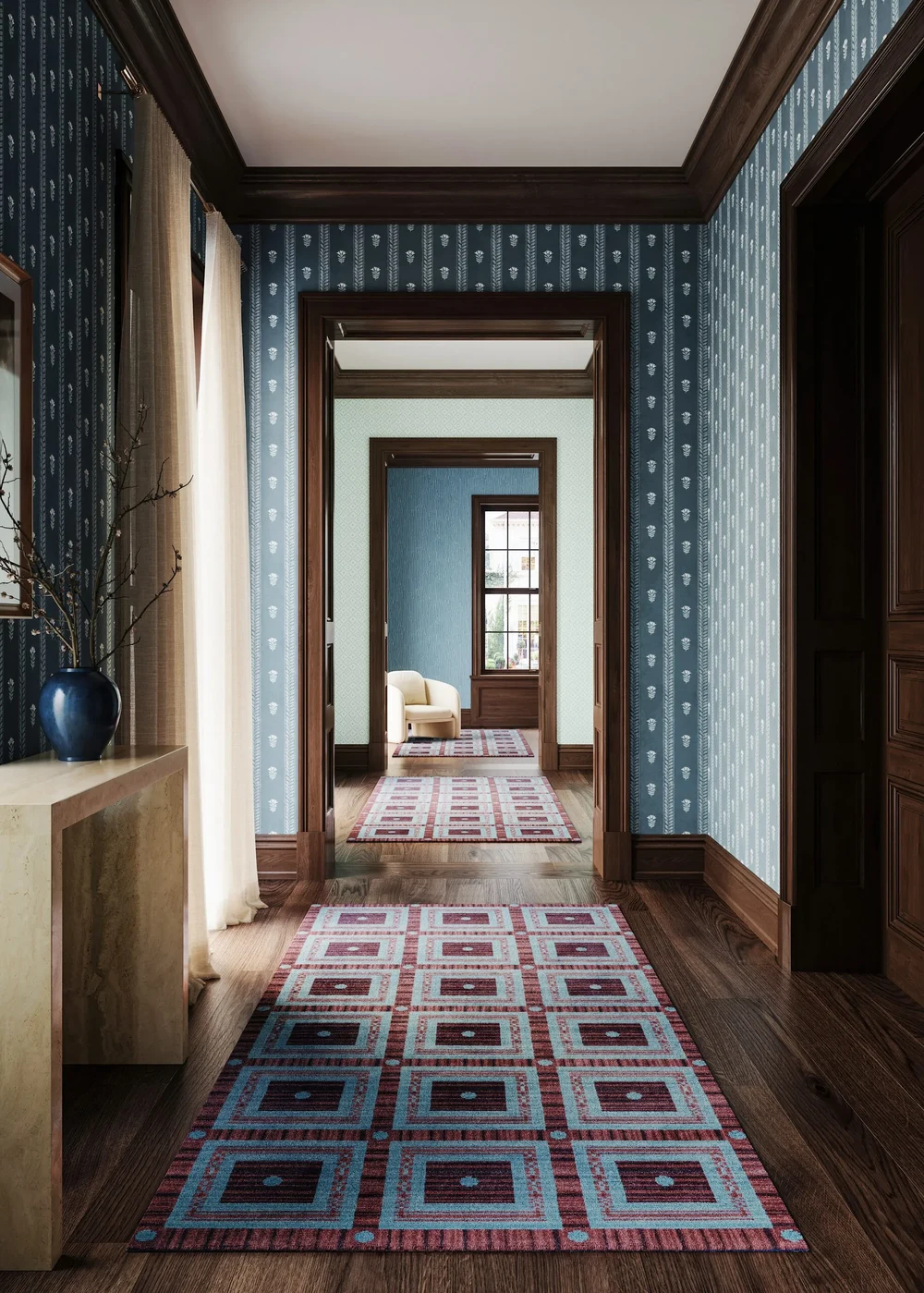
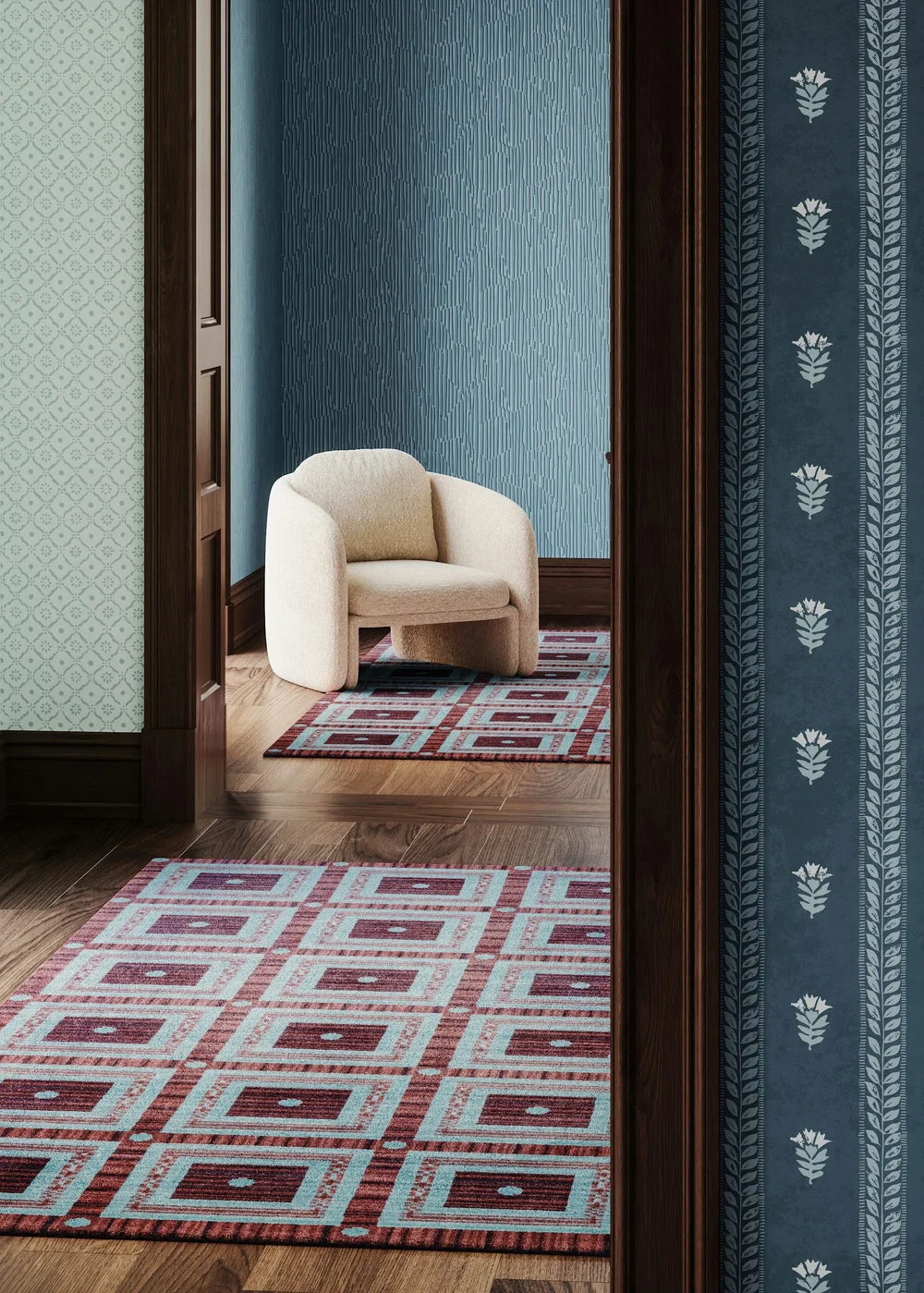
Two patterned textiles in one room can compete for attention. Both meet in all four rooms; in the hallway, three wallcoverings share the view with a runner. The answer was layering rather than toning the patterns down — scale and contrast establish a hierarchy that gives the eye a place to rest, so pattern on pattern becomes a coherent visual world.
One design, two materials
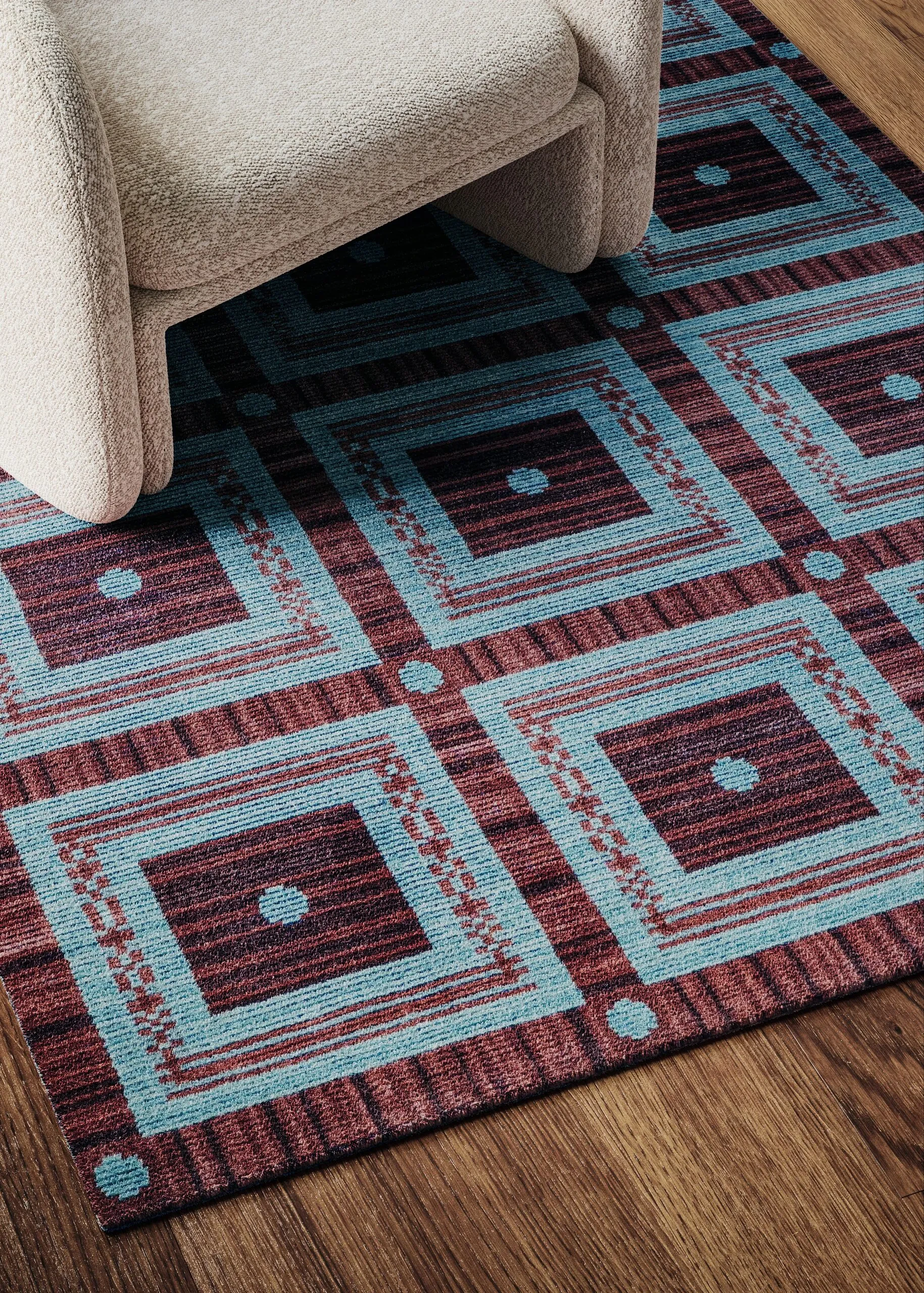
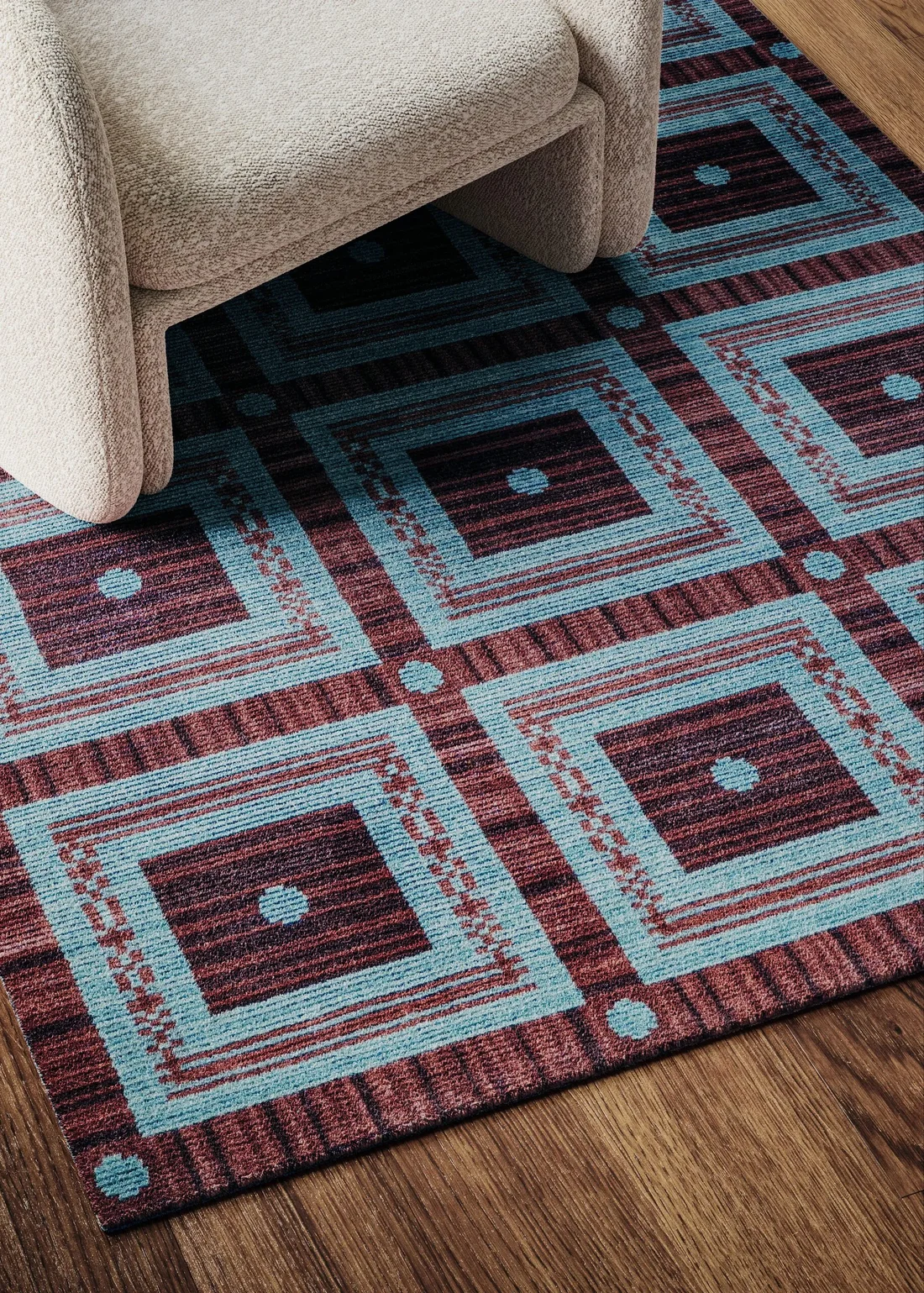
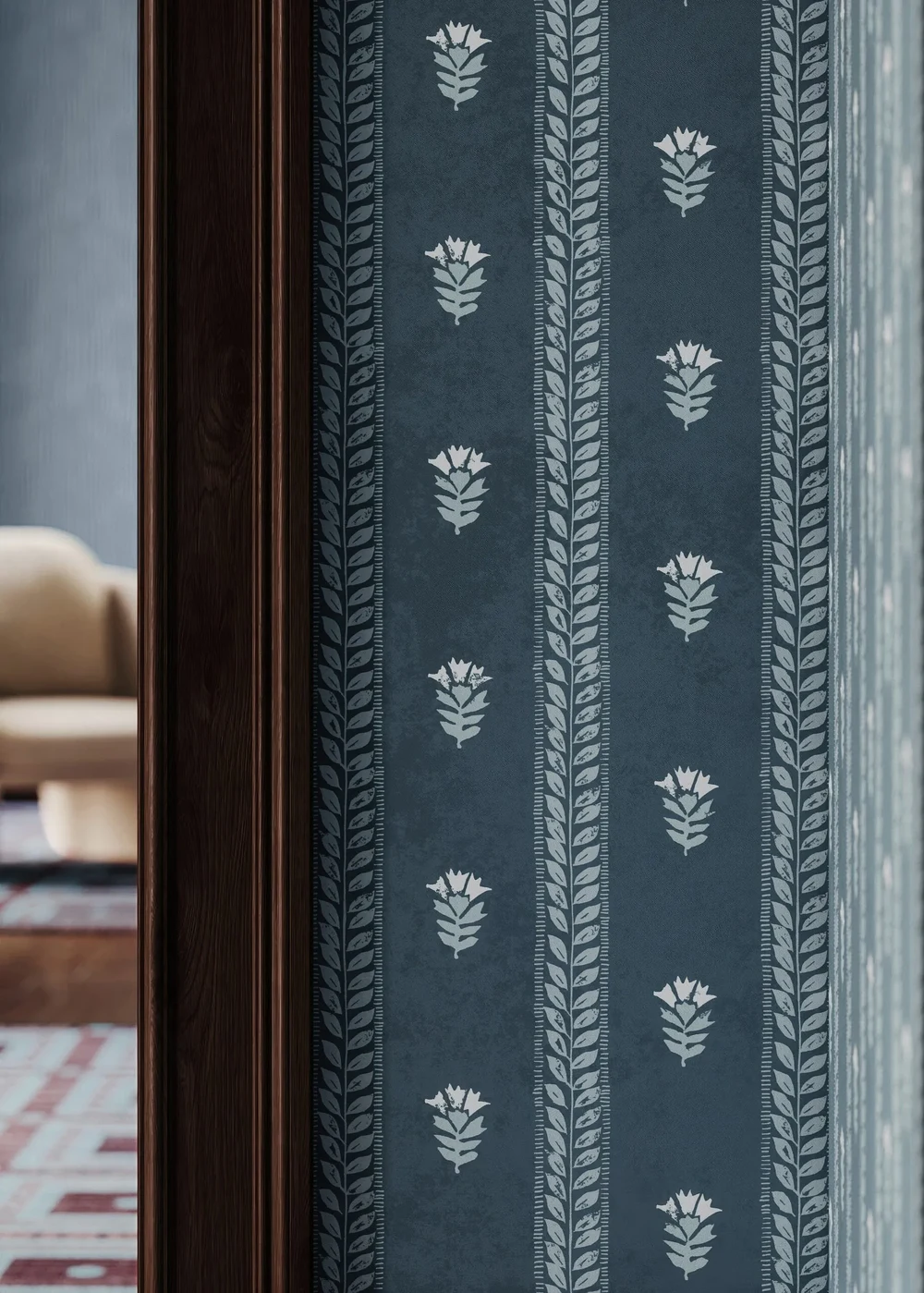
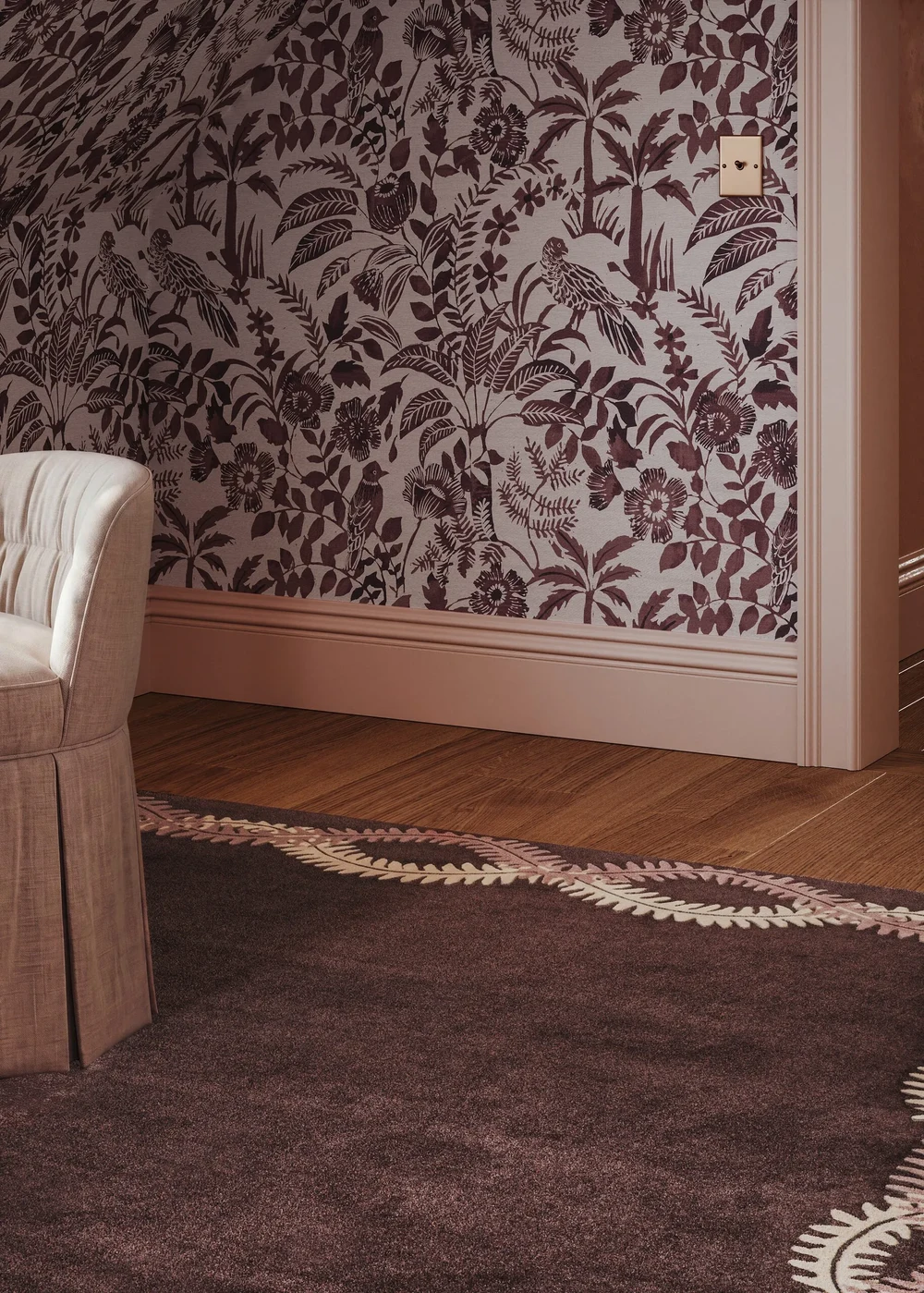
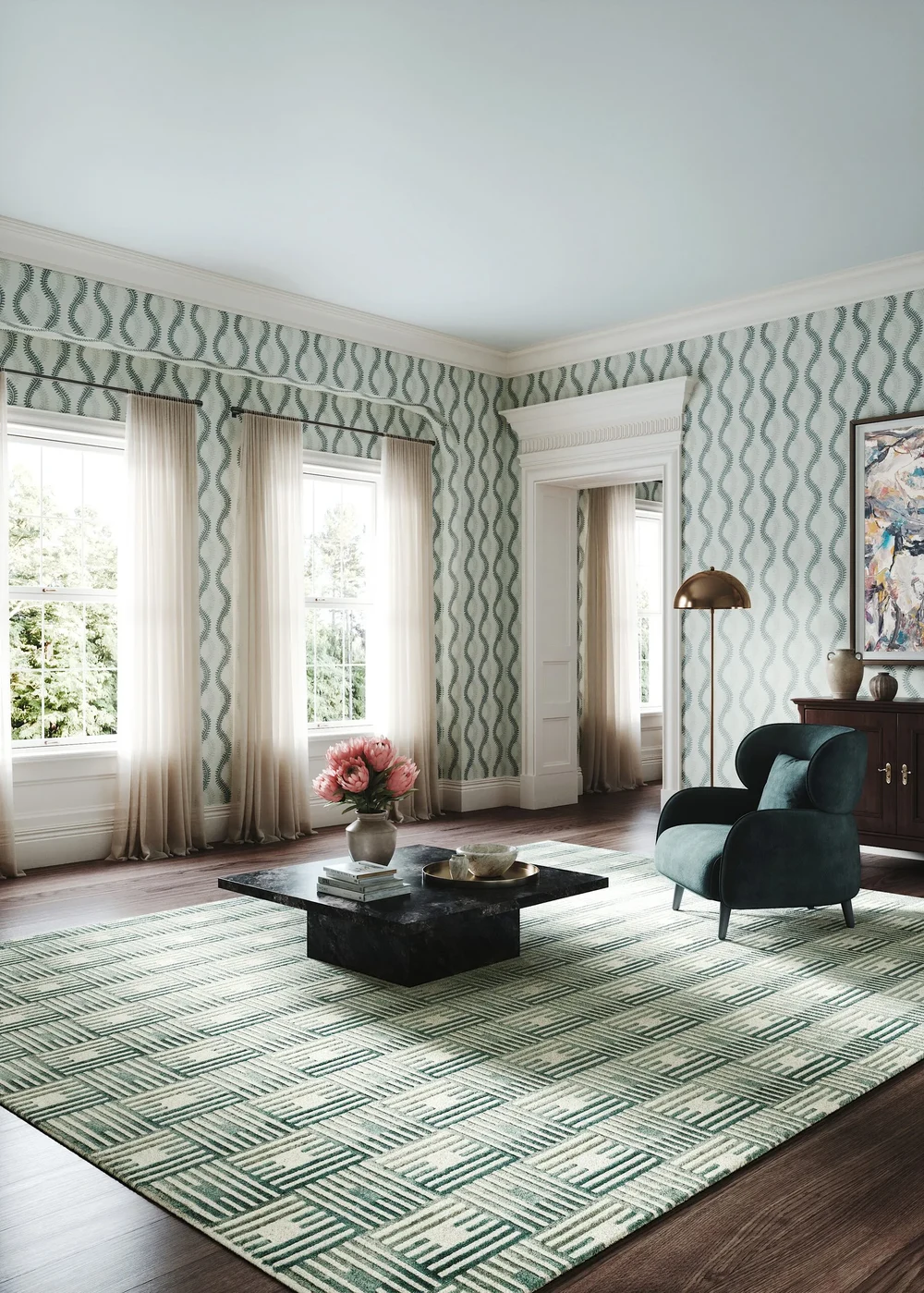
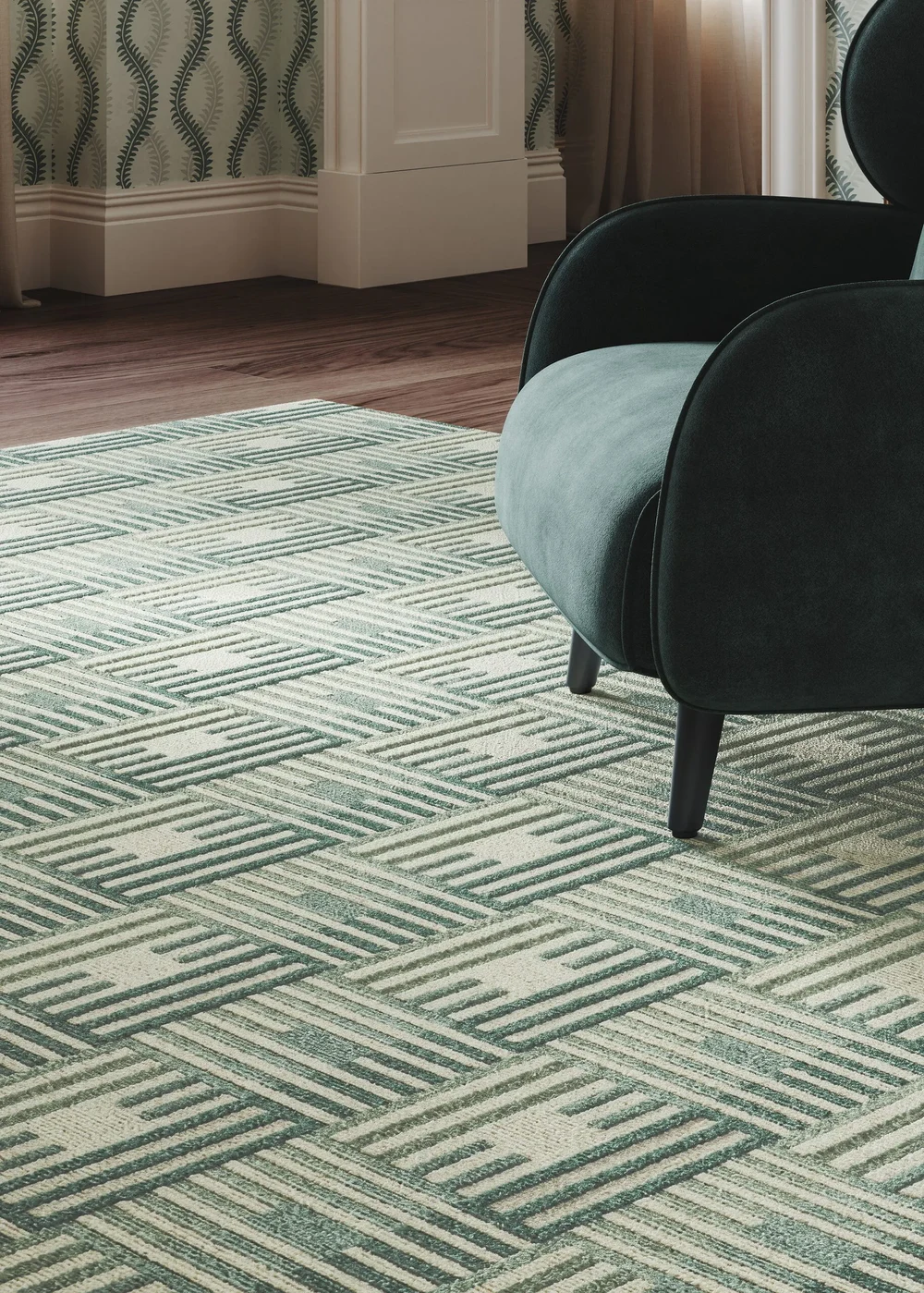
Fine Vine appears twice: as a hand-knotted rug in Blackberry and as a wallcovering in Cerulean. The related motif presents different challenges for 3D visualization — on the rug it forms a raised border, on the wall it creates a repeating rhythm. Pile height, fiber direction and shadows within the rug called for a different treatment from the wallcovering's surface, so we developed the two digital materials separately.
Pattern repeats follow the architecture
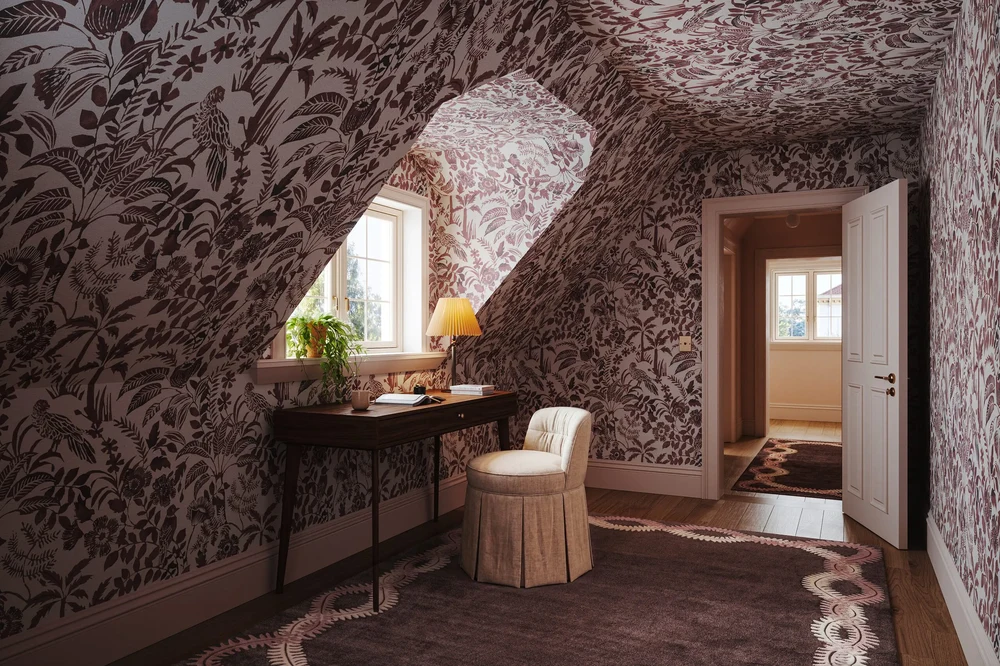
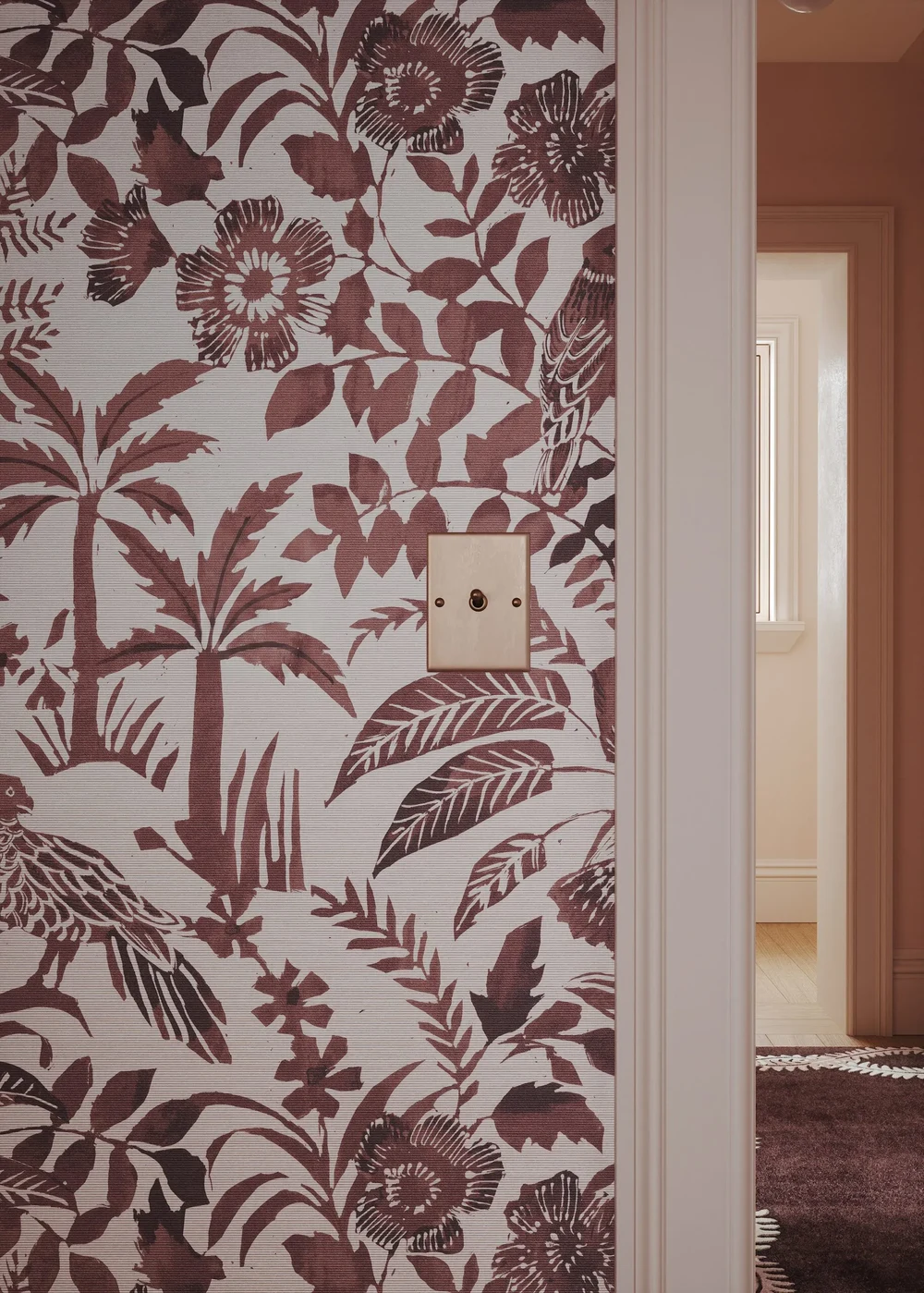
The wallcovering had to continue around cornices, into door reveals and over doorframes, extending across a sloped ceiling in the third room. 3D modeling and texture mapping work together here: geometry defines the surface, while mapping positions the pattern — showing how the design relates to different architectural elements, not just a swatch.
Four rooms designed around textiles
Before we could render a pattern, we needed to design the rooms — collected interiors, timeless surfaces without period imitation, painted millwork rather than white woodwork, and a deep, saturated palette. Antique pieces sit alongside midcentury silhouettes and upholstered furniture; furniture makes the setting convincing, while the textiles remain the focus.